
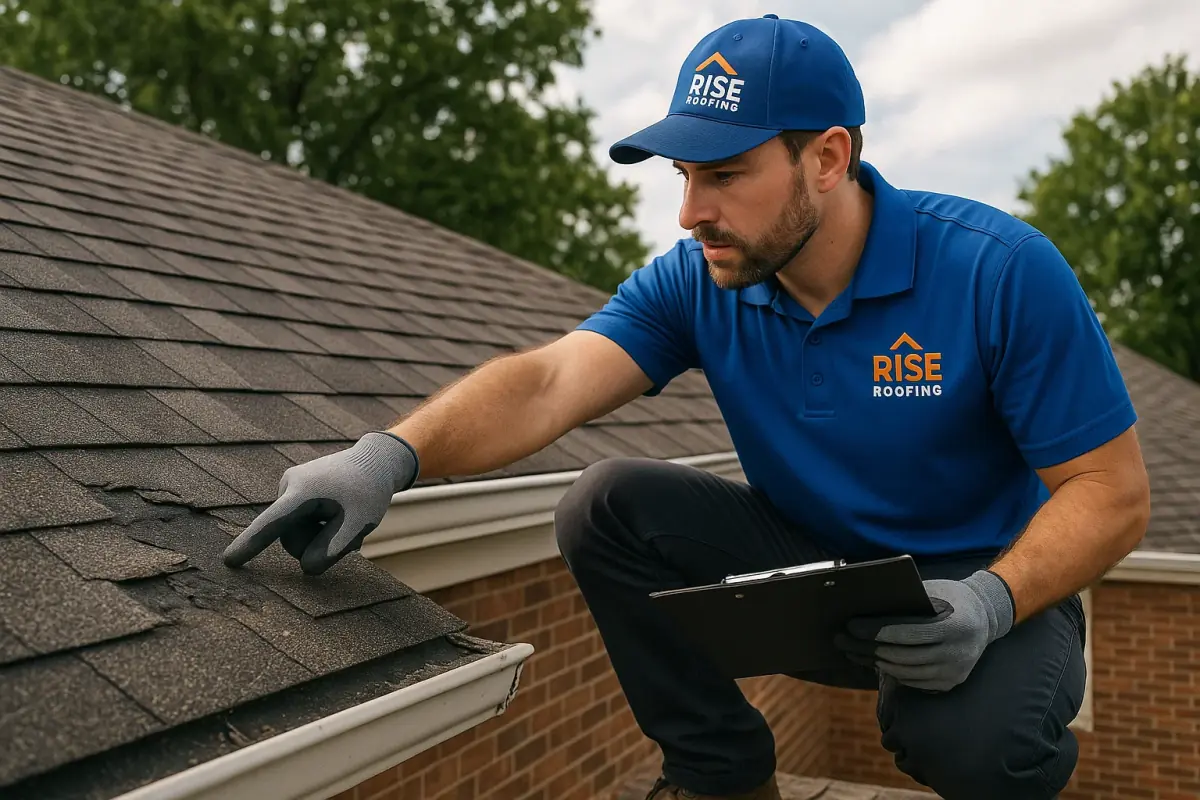
Does insurance cover roof replacement? Yes, when something sudden that your policy covers, such as hail, wind or a falling tree, damages the roof badly enough that the adjuster writes it up for replacement. No, when the roof has simply worn out. The Texas Department of Insurance (TDI) is blunt about the second half: an insurer will not pay for a new roof simply because the old one is aged or worn.
Between those two answers sit the details that decide what you actually receive: whether your policy covers wind and hail at all, how it values an older roof, the size of your deductible, and any hail exclusions. This guide works through each one, with notes for homeowners around Corpus Christi.
4 Questions That Decide Whether Insurance Pays for a Roof
- What caused the damage: a sudden event, or years of sun, salt air and weather?
- Does your policy cover that cause? On the coast, wind and hail are often on a separate policy.
- How does your policy value the roof: replacement cost, actual cash value, or a schedule tied to the roof's age?
- Is the damage functional and larger than your deductible? Cosmetic hail marks and small repairs may pay nothing.
A roof can pass the first question and still fail the third or fourth, so it pays to know all four before a storm. The sections below take them one at a time.
Sudden Damage vs Wear and Tear
A home policy pays when something it covers, like a fire or a storm, damages the house. TDI's home insurance guide lists what most policies cover, including fire and lightning, theft, vandalism, aircraft and vehicles, and windstorm, hurricane and hail, except on the Gulf Coast. It also lists what most policies leave out: wear and tear, termites and other pests, floods, and continuous water leaks.
On a roof, the line usually falls like this:
- Usually covered: shingles or panels torn loose in a windstorm, hail that cracks or punctures the roof covering, a tree or large limb that lands on the house, and fire.
- Usually not covered: shingles that have curled, cracked and shed their granules with age, rusted flashing, rotted boards, and a roof that is simply worn out. TDI's list of things a home policy won't cover names worn roofs and rotted boards among damage that happens over time.
Plenty of roofs show both kinds of damage after a storm. The adjuster can approve what the storm did and leave out what age did, which is why the roof's condition before the storm matters as much as the storm itself.
Will Insurance Pay for a New Roof or Only a Repair?
Even when the damage is covered, the policy pays to fix what the covered event damaged. Whether that means a handful of shingles, one slope or the entire roof is the adjuster's call: TDI's home guide says the adjuster decides how much damage there is and estimates the cost to repair or replace it. The company bases its payment on that estimate and decides coverage under the policy terms.
A complete record of the damage helps the adjuster see the whole picture. At our free inspection we photograph each slope, the ridge, the flashing, the vents and the attic when we can reach it, and we write up what we found.
You send that report to your insurer with the claim. We don't argue the scope; the adjuster sets it. If a replacement is approved and the crew finds damage under the old roof that the scope left out, we photograph it and send the insurer a supplement to review.
On the coast, an approved replacement also brings the windstorm rules into play. Inside the TDI catastrophe area we always tear the old roof off down to the deck before the new one goes on, and the windstorm inspections follow the work. If the deck under it is rotten, new boards are billed by the sheet at the rate shown on your quote, separate from the signed price.
For the order of events from first call to final check, see our step-by-step roof insurance claim guide.
Does Homeowners Insurance Cover Roof Replacement on the Coast?
Often not for wind and hail. TDI's windstorm insurance page explains that a coastal homeowners policy may leave out wind and hail damage, which calls for a separate windstorm policy, and many people get it from the Texas Windstorm Insurance Association (TWIA). No Texas law makes you carry windstorm coverage, though TDI says a mortgage lender will likely insist on it.
So for homes in Nueces, Kleberg, Aransas or San Patricio County, the answer to "does insurance cover roof replacement" can depend on two policies. The homeowners policy may pay when a tree falls or a fire starts. The windstorm policy is the one that pays for hail and wind, if it covers the loss.
Those counties sit in TDI's catastrophe area, and TDI says most homes need a certificate of compliance to buy a TWIA policy. In most cases a replacement roof there is inspected while it goes on, and once it passes, TDI issues the WPI-8 certificate. That process is explained in our Texas windstorm insurance guide.
Replacement Cost, Actual Cash Value and Roof-Age Schedules
Coverage isn't only a yes or a no. How much the policy pays depends on how it values the roof, and TDI describes the two main types on its replacement cost vs actual cash value page:
- Replacement cost pays what it costs to replace the roof at current prices, minus your deductible. The money usually comes in two checks, with the second released after the work is done. TDI's home guide adds that you usually must finish repairs within a set period to collect it, so ask your adjuster how long you have.
- Actual cash value subtracts depreciation for age and condition. In an example on TDI's site, an actual cash value policy pays nothing toward replacing a 20-year-old roof once the 2% deductible is taken out.
Some policies use a third method: a fixed schedule that pays less for the roof as it gets older. TDI's statistical plan for residential policies tells insurers to report those age-based schedules as actual cash value coverage.
TDI also notes that as roofs age, some companies move the roof to actual cash value coverage when the policy renews, and a roof in poor shape can lose coverage entirely. Read your renewal papers for those changes. Our ACV vs RCV roof insurance guide goes deeper.
Cosmetic Hail Damage Exclusions
Hail can dent a metal roof or scuff shingles without letting any water in. Some policies exclude that kind of cosmetic damage. TDI adopted one version of this exclusion as endorsement HO-145 in 1998, and its wording shows how such a clause can work:
- Cosmetic damage is damage that changes how the roof covering looks but doesn't let water through or stop the roof from keeping out the weather.
- Hail damage that does let water through, or makes the roof covering fail at its job, stays covered.
- The endorsement could be attached only to a policy receiving a premium credit for an impact-resistant roof covering rated under UL 2218, the insured had to sign it, and insurers had to warn consumers that replacing a damaged roof with a hail-resistant one could bring a cosmetic damage exclusion.
Your policy may use different wording, so read the exclusion itself. If you have an impact-resistant roof or plan to install one, ask your agent whether such an exclusion applies and how it defines cosmetic. Our Class 3 and Class 4 shingle guide covers impact ratings and insurance credits.
Deductibles: Why a Covered Roof Can Still Pay Little
Every payment starts after the deductible. A deductible can be a set dollar figure or a share of what the house is insured for, and TDI suggests asking your agent if wind and hail carry their own deductible, separate from other damage. TDI's deductibles page shows a 5% deductible that is larger than the cost of repairing a hail-damaged roof, leaving the policy owing nothing.
When the damage costs less than the deductible, TDI says the company may close the claim without paying. Look up the dollar amount of each deductible on your declarations page before you file.
No roofer can make a deductible disappear. As TDI explains on its contractor scams page, Texas law forbids a contractor from offering to waive your deductible or working it into a bid, so treat any offer like that as a warning sign.
Does Insurance Cover Roof Leaks?
Sometimes. It depends on what made the roof leak and how quickly the damage happened.
- A storm opened the roof: TDI's storm damage page says a homeowners policy may cover water damage from rain that gets in because the roof was damaged in the storm.
- Sudden, accidental water damage: most homeowners policies cover it, according to TDI's water damage and mold page.
- A slow leak: most policies don't cover damage from gradual leaks or seepage, including the mold that grows from them.
Wear and tear is excluded, so a part that simply wore out, such as a cracked pipe boot or old flashing, is usually yours to fix. Ask your agent how your policy treats the water damage it caused.
Report hidden water damage fast; TDI says you usually must report it within days of first seeing it. Stop the water if you can, photograph everything and keep receipts. Our roof leak repair guide covers the fix itself.
Questions to Ask Your Agent Before the Next Storm
The time to learn how your policy treats the roof is before anything happens to it. TDI's renewal checklist suggests reading every renewal for roof coverage changes, new endorsements and exclusions, and checking that the roof age listed for your house is correct. A short call to your agent can answer the rest:
- Is my roof covered at replacement cost, at actual cash value, or on a schedule based on its age?
- Which policy pays for wind and hail at my address, and what is that deductible in dollars?
- Does either policy exclude cosmetic hail damage, and how does it define cosmetic?
- What is the deadline to finish repairs and still collect any depreciation the company holds back?
- Would an impact-resistant roof change my premium or my coverage terms?
Write the answers down and keep them with the policy. When a storm comes through, you will already know whether a claim makes sense.
When Insurance Won't Pay for Your Roof
If the roof is worn out rather than storm-damaged, plan the replacement yourself instead of waiting for a storm to force it. Typical lifespans here are 12 to 18 years for 3-tab shingles, 25 to 30 for architectural shingles such as Owens Corning Duration, 30 or more for impact-resistant (Class 4) shingles, 50 to 70 for standing seam metal and 50 or more for DECRA stone-coated steel. Our guide to how long a roof lasts goes into more detail.
If a claim was denied and you think that's wrong, TDI says on its denied claims page that the company must tell you in writing why it denied the claim. You can send supporting documents, ask for appraisal if the dispute is about the amount, or file a complaint with TDI.
A different problem is an insurer, not a storm, saying the roof has to go before the policy can renew. That has its own rules and options, covered in our guide to insurance requiring a roof replacement.
How We Help You Find Out Where You Stand
A free inspection from RISE Roofing tells you what we see on your roof: storm damage, wear, or both. You get dated photos (we use a drone when a roof is steep or tall) plus a written report for your insurer. We don't decide coverage, attend the adjuster's visit or argue a claim; the insurance company makes those calls.
If you go ahead with a new roof, the quote comes in writing with a locked price, usually one to two days after the inspection, and the work carries our 10-year workmanship warranty. We are an Owens Corning Preferred Contractor and a certified DECRA and Tilcor installer. For costs insurance won't cover, qualified homeowners can apply to Acorn Finance, a third-party lender, for financing; see roof financing. Call (361) 204-5325 or schedule a free inspection.
Frequently Asked Questions
Not because of age alone. TDI's roof guidance makes clear that age or wear by itself isn't a reason for the company to pay. If a covered storm damages an older roof, the claim may still be paid, but actual cash value coverage or a roof-age payment schedule can shrink the payment sharply.
If your policy covers hail and the adjuster finds hail damage, the company may pay to repair or replace the roof, minus your deductible. A cosmetic damage exclusion, if your policy has one, can leave out hail marks that don't let water in. On the coast, hail is often covered by a separate windstorm policy.
Usually not. TDI says most policies don't cover gradual leaks or the wear that causes them. Water that gets in suddenly, or rain that enters after a storm damages the roof, is more likely to be covered.
The policy pays to fix what the covered event damaged, and the adjuster decides whether that is a repair, one slope or the whole roof. A photo-backed inspection report gives the adjuster a full record of the damage to consider.