Tear-off and new roof for warehouses, offices, retail, churches and metal buildings, starting with a free inspection.
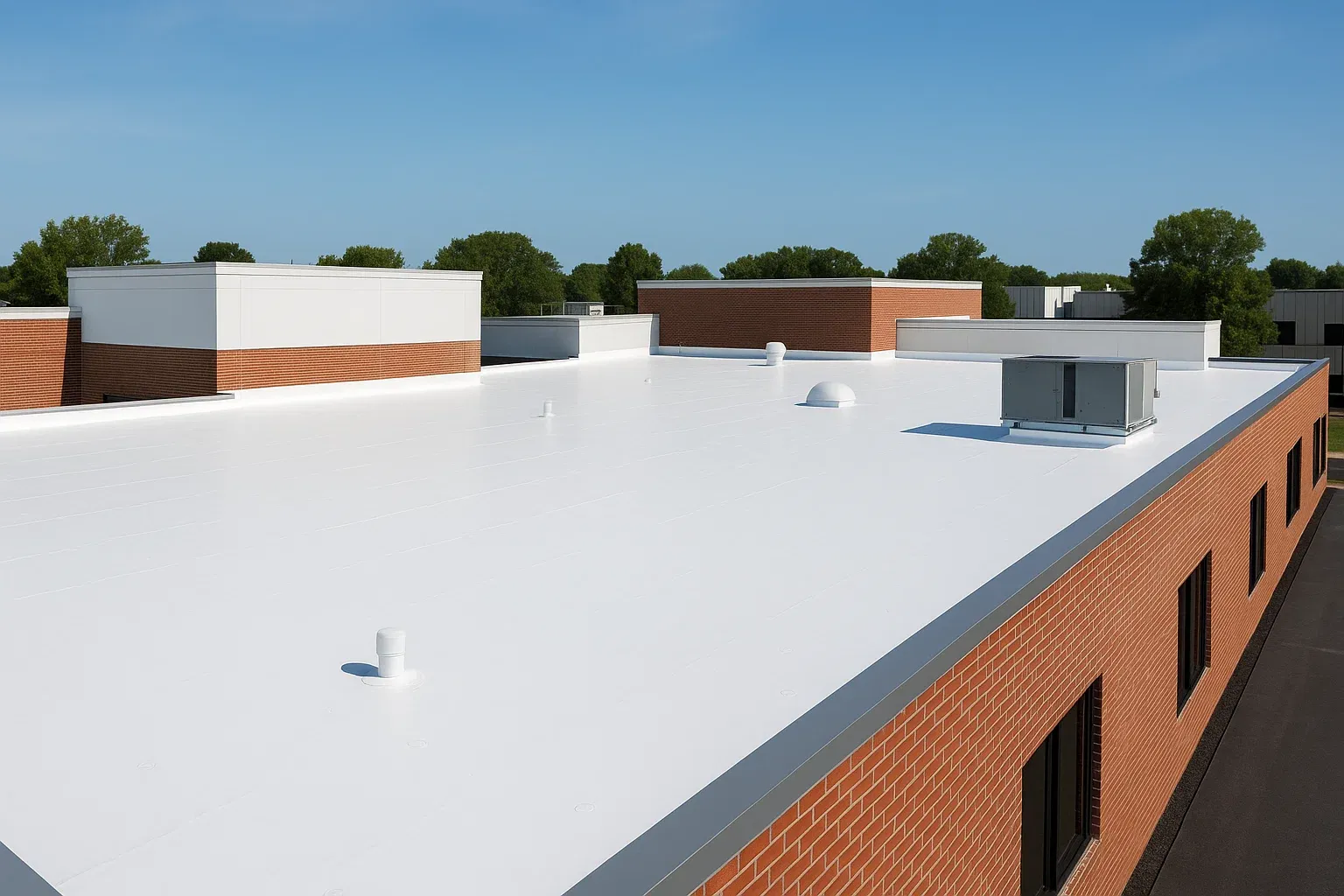
A commercial roof replacement takes the old roof off down to the deck and builds a new one in its place: insulation, a membrane or metal panels, flashing and edge metal. RISE Roofing replaces flat, low-slope and metal roofs on warehouses, strip centers, offices, churches, schools, apartment buildings and metal barns in Corpus Christi and across the Coastal Bend.
Replacing a roof costs more than any other fix, so it should be the answer only when the roof can't be saved. That is why every job starts with a free inspection with photos. On buildings over 5,000 square feet, the visit also includes core samples and infrared moisture scanning at no charge, and those tests show whether the roof has to come off or whether a repair or coating would carry it for years.
Most commercial roofs around Corpus Christi are flat or nearly flat, and they rarely fail all at once. These are the patterns that usually move a building from patching to a flat roof replacement:
A tired roof doesn't always need to come off. If the inspection finds mostly dry insulation and a surface that is still sound, a coating can add 10 to 20 years to the roof's life for far less disruption. RISE is a GAF certified coating contractor, and a coating job can carry the GAF Emerald Pledge warranty, which runs 10 to 20 years depending on coating thickness. Our commercial roof coating page explains which roofs qualify.
A coating is the wrong call over wet insulation, because it traps the water inside the roof. On the other hand, when the trouble is limited to one curb, drain or seam, a targeted commercial roof repair is the sensible first step. Repairs go on our regular calendar and can be a couple of weeks out in busy stretches. If the inspection says a repair would only buy a season or two, we will tell you that and price the replacement alongside it.
We walk the whole roof and photograph what we find: the field of the membrane or panels, seams, flashing at walls and curbs, drains and scuppers, edge metal and every rooftop unit. Inside, we check ceilings and the underside of the deck wherever it can be seen.
On larger buildings, the cores and the infrared scan add the part you can't see from the surface. A core is a small cut through the roof layers that shows how many roofs are stacked on the deck and whether the boards are dry. The infrared scan maps where wet insulation sits across the roof, so the scope of the tear-off is based on evidence instead of guesses. Our commercial roof inspection page describes the visit in more detail.
After the visit you get the photos, the test results and a written, price-locked quote, usually 24 to 48 hours later. The proposal holds for about 15 days, and the price locks once you sign. For a rough budget before anyone climbs a ladder, try our commercial roof cost calculator.
A replacement is the right moment to switch systems if the old one never suited the building. We match the new roof to how the building is used, how long you expect to own it and how much foot traffic crosses the roof. A change of system can also change the weight on the deck and how the roof attaches, and the proposal accounts for both.
TPO is a white single-ply sheet with heat-welded seams, and it is the most common pick for warehouses, offices and retail buildings with simple layouts. RISE holds a manufacturer certification for TPO, and warranties on our TPO roofs reach up to 20 years, including a 20-year manufacturer material warranty. Our TPO roofing page covers thickness and attachment options.
PVC is also heat-welded, but it holds up better where grease or chemicals reach the roof, which is why restaurants and some light industrial buildings choose it. Details are on our PVC roofing page.
Modified bitumen goes down in multiple plies and tolerates heavy foot traffic and crowded equipment areas. Our modified bitumen page explains where it fits.
For metal buildings and sloped commercial roofs, we install 22, 24 and 26 gauge panels with PVDF (Kynar) or SMP paint. A commercial metal re-roof is always a tear-off; we never fasten new panels over old ones. Expected life depends on the panel: about 30 to 40 years for R-panel, 35 to 45 for 5V, 25 to 40 for corrugated and 50 to 70 for standing seam. Long runs can be roll-formed on site. See our commercial metal roofing page.
With the old layers gone, the deck is open, and that is the cheapest time to correct problems the old roof lived with for years. Tapered insulation can add slope toward the drains, crickets can steer water away from curbs and walls, and extra drains or scuppers can go where water used to stand.
Wet boards are replaced, and the new insulation can be thicker than what came off. Roof color is worth a thought in this climate too. The U.S. EPA's guide to cool roofs says buildings with cool roofs use less air conditioning, and it lists light-colored single-ply membranes and reflective coatings among the cool options for low-slope buildings.
Every curb, pipe and vent gets new flashing. If a curb is too short to flash correctly, raising it belongs in the scope, and the proposal should say who disconnects and resets the rooftop units.
Nueces, San Patricio and Aransas are among the first-tier coastal counties in the Texas Department of Insurance windstorm program. On its windstorm program questions page, TDI says the program covers re-roofs and roof repairs, and that a commercial structure must follow TDI's adopted building standards if it will be insured for wind and hail through the Texas Windstorm Insurance Association.
For those buildings, the new roof is inspected while the work is under way, and a passing inspection leads TDI to issue the building's WPI-8 certificate of compliance. We schedule the inspections, file the windstorm paperwork and pull the city permit as part of the job, and we settle attachment and edge details before materials are ordered. TDI also posts WPI-8 certificates online, which is handy when a building changes hands.
If your building is insured through a private carrier rather than TWIA, ask your agent what the policy requires after a re-roof. We can supply the permit records, the inspection paperwork and the photos from the job.
Most businesses stay open through a commercial roof replacement. Before the crew arrives, we agree with the owner or property manager on work hours, where the dumpster and lift will sit, how materials reach the roof and which doors and parking areas stay clear for customers.
We plan the tear-off in sections sized so each one can be covered again before the crew leaves for the day. Tear-off is loud, so tenants who need quiet, such as medical offices, schools and churches with weekday services, get a say in the schedule. For apartment buildings and HOA properties, the proposal lays out the timeline so the board can tell residents what to expect.
We keep tear-off debris contained, and the ground around the building is swept for stray fasteners as the job winds down. At the end we walk the finished roof with you, point out the new drains and flashing, and hand over the paperwork.
Hail and tropical wind can turn an aging roof into a total loss overnight. After a storm, we inspect the roof and record the damage with photos and measurements in a written report you can pass along to your insurance company. The scope of the claim, and what the policy pays for, is decided by the insurer's adjuster.
Once tear-off starts, crews sometimes find damage nobody could see from the surface, such as soaked insulation or rusted deck panels. When that happens, we document it with photos and send your insurer a supplement for the added work. Storm-damaged roofs inside the windstorm area still need the same TDI inspections as any other re-roof.
NOAA sets the official Atlantic hurricane season from June 1 to November 30. A roof that is half torn off when a storm heads toward the coast puts the building and its contents at risk, so if your roof is near the end of its life, start the conversation in winter or early spring. That leaves time for the inspection, any board or lender approvals, material orders and the windstorm inspections before summer.
Replacements still happen during the season. We watch the forecast closely and keep the open area small. Because the price locks when you sign, booking early doesn't cost you anything if material prices climb later.
Two bids can land close in price and cover very different work. Before you sign with anyone, make sure each proposal answers these questions in writing:
Our proposals answer each of these in writing, so an owner, a property manager or a church board can line bids up side by side.
Two kinds of coverage apply to a new commercial roof. The manufacturer's material warranty covers the product itself: on TPO, that is a 20-year manufacturer material warranty, and other systems carry their maker's terms. Our 10-year workmanship warranty covers the installation. It stays with the owner who signed and does not transfer when a building is sold, which is worth knowing if a sale is on the horizon.
Keep the warranty papers, the WPI-8, the core results and the inspection photos in one file. They make later repairs, insurance claims and a future sale much simpler. A yearly inspection, plus one after any major storm, catches small problems while they are still cheap to fix. If you are building new rather than replacing, our page on new commercial roof installation covers that process.
Usually, yes. We agree on work hours, staging and access with you or your property manager, and we tear off the roof in sections that can be covered again before the crew leaves each day.
No. Our commercial replacements are tear-offs down to the deck, so wet insulation and hidden damage come out instead of being sealed under the new roof. Commercial metal re-roofs are always tear-offs as well.
Yes. On buildings over 5,000 square feet they are part of our free commercial inspection, at no charge. Smaller buildings get the same free inspection with photos.
If the building will be insured for wind and hail through TWIA, it has to meet TDI's adopted building standards, and the re-roof is inspected during the work before TDI issues a WPI-8. We schedule those inspections and file the paperwork along with the city permit.
Industry standards from the National Roofing Contractors Association (NRCA).
No waiting around for multiple contractors to come bid your roof. One quick call is all it takes.
Pick any slot that works for you — online and instant.
Free video or voice call. We answer your questions and gather what we need.
We email your price-locked quote — no pressure, no sales visit.
🔒 Free, no-obligation quote — Price-locked estimate in 24–48 hrs
Trace your roof on satellite imagery and get a real installed price in under 60 seconds.
Powered by satellite roof measurement technology. No obligation.