Silicone and acrylic coatings that add 10 to 20 years to a sound flat or metal roof, with no tear-off.
A commercial roof coating is a liquid we spray or roll over your existing roof, where it cures into one seamless, reflective layer. RISE Roofing coats flat and low-slope roofs across Corpus Christi and the Coastal Bend, and we are a GAF certified coating contractor.
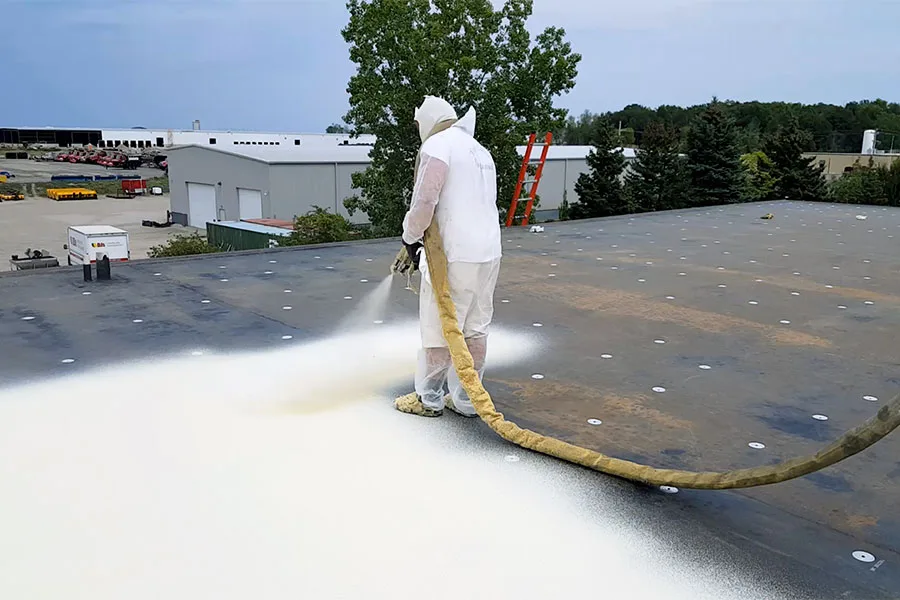
The coating does not replace the roof underneath. It seals the worn surface, the seams and the small cracks, and it gives the sun and rain a new top layer to wear down. On a roof that is still dry and well attached, a coating extends its life by 10 to 20 years without a tear-off.
That makes coating a good fit for owners who need the building open while the work happens. Nothing is torn off, the deck is never exposed to weather, and tenants keep working below. We coat roofs on:
We install both silicone and acrylic coatings, and the roof decides between them. GAF, the maker of the coatings we apply, says on its commercial roof coatings page that neither one wins in every case, because each solves a different problem.
A silicone roof coating can stand up to ponding water, and it dries faster. That matters on the Coastal Bend, where plenty of flat roofs have low spots that hold rain for a day or more after a storm. If your roof ponds, silicone is usually the right call.
Acrylic is easier to work with and costs less per square. Each coat usually needs about 24 hours to cure before the next one goes on. It suits roofs that shed water quickly, such as sloped metal roofs, where standing water is not a concern.
We recommend one system in writing after the inspection, with the reason tied to what we saw on your roof: the substrate, the drainage and how the building is used.
GAF lists a wide range of surfaces its coatings can go over: metal, aged single-ply membranes, smooth and granulated asphalt roofs, structural concrete, spray foam, and roofs that already carry an acrylic coating. That covers most commercial roofs we see here, including TPO roofing, modified bitumen, built-up roofs and exposed-fastener metal roofs.
Good candidates share a few traits: the membrane or panels are weathered but intact, leaks are limited to a few seams or details, the insulation is dry, and the owner wants to put off a tear-off for another decade or two.
The surface is only half the question. A coating seals what is already there, so it can only be as sound as the roof under it. Coating is the wrong choice when:
When we find one of these, we say so and price a commercial roof replacement instead. Sealing water inside a roof only hides the damage for a while.
Prep work changes with the roof, and the manufacturer spells it out. GAF's published steps for coating a metal roof with silicone start with an adhesion test. Next come repairs to the sheet metal and securing or replacing every loose or missing fastener. Then each fastener is sealed with silicone mastic, seams are sealed where the panel profile needs it, and curbs, penetrations and drains are reinforced with mastic and fabric before the coating goes on.
That order matters on the coast. On an exposed-fastener roof, salt air works on the screws, the washers and the panel laps long before the panels themselves wear out. A coating sprayed over backed-out screws simply leaks around them later, so the fastener work comes first.
Asphalt roofs, such as modified bitumen and built-up roofs, follow a different list. GAF's steps for coating them with silicone call for a clean, dry, tight roof, a moisture scan to find every wet area, and replacing wet membrane and insulation with like material. A primer then keeps the asphalt from bleeding through the coating.
Single-ply roofs such as aged TPO fall in between: the membrane is cleaned, open seams are repaired, and the details are reinforced. In every case, the coating is the last step, not the first.
Every coating starts with our free commercial inspection. We walk the whole roof, photograph the seams, flashings, drains and edge metal, and note where water sits after rain.
The bigger question is what lies under the surface. For any building larger than 5,000 square feet, we also cut core samples and scan the roof with an infrared camera before suggesting a coating, at no charge. A core reveals whether the insulation is dry and how many old roofs sit on the deck, and the infrared images show the location and spread of any wet areas.
Small wet sections can be cut out and replaced before the coating goes on. If the scan shows wet insulation across much of the roof, coating is off the table. Our commercial roof inspection page explains the visit step by step.
For most buildings, a coating runs about $2.50-$4 per sq ft vs $7.50-$15 per sq ft for a commercial re-roof. The gap comes from what a coating skips: no tear-off, no disposal, no new insulation and no new membrane. It also spares an occupied building the noise, dust and open roof of a tear-off.
Where your roof lands in that range depends on a few things:
The written coating proposal usually arrives a day or two after the inspection. It stays open for about 15 days, and once you sign, the price cannot go up.
Because we are a GAF certified coating contractor, we can register the GAF Emerald Pledge warranty on the coating systems we install. The Emerald Pledge term runs 10 to 20 years, and the coating thickness decides where your roof lands in that range. A thicker application earns a longer term.
Thickness is measured in mils of dry coating, not in the number of coats. Two thin coats can come out thinner than one heavy coat, so a proposal should name the total dry thickness. Ours lists the coating system, the thickness and the Emerald Pledge term before you sign.
GAF's own coatings page states that its liquid-applied systems qualify for limited guarantees of 10 to 20 years, depending on the system and the contractor's certification level. Each coating warranty has to be registered with the manufacturer, and we take care of that step when the job is done.
The manufacturer warranty is separate from our 10-year workmanship warranty, which covers how we applied the coating. If you sell the building, that workmanship coverage ends with your ownership; it is not passed to the buyer.
Weather sets the pace. A coating needs a dry surface and time to cure, and on the Coastal Bend, morning dew, muggy air and pop-up showers shorten the working day. We plan coating days around the forecast instead of rushing a coat ahead of rain.
A white or light-colored coating turns the roof into what the Cool Roof Rating Council calls a cool roof: one that reflects sunlight and sheds the heat it does absorb. The council notes that a cooler roof sends less heat into the building, so the air conditioning does not have to work as hard, and that a lower roof temperature may extend the roof's service life.
Two numbers describe how cool a roof surface is: solar reflectance and thermal emittance, each rated from 0 to 1. The council measures both when a product is new and again after three years outdoors, then publishes the results in its rated products directory.
If cooling costs matter to you, ask for the rated values of the coating named in your proposal and look at the three-year numbers, since every roof picks up dust and grime with age.
A coating renews the surface. It does not change how the roof is held down, add slope or replace wet insulation. If the inspection finds loose edge metal or membrane lifting at the perimeter, that gets repaired before any coating goes on.
If the roof needs replacing instead, the job falls under the state windstorm program. The Texas Department of Insurance treats Nueces County and 13 other coastal counties as a catastrophe area. Inside that area, most roof replacements and major repairs must, according to TDI, pass a windstorm inspection and earn a certificate of compliance before the building can qualify for a TWIA policy. On a replacement, we pull the city permit and schedule those inspections, and TDI issues the WPI-8 when the work passes. Our Texas windstorm guide covers the process.
A coated roof needs less care than most, but not none. Walk the roof, or have it walked, every year and again after a tropical storm passes. Look for spots worn thin by foot traffic, nicks from dropped tools around rooftop units, debris in the drains and any place where the coating has lifted at an edge or a pipe.
Our commercial inspection is free, so a yearly check before hurricane season costs you nothing and catches worn spots while they are still small. Keep a log of who goes on the roof, especially HVAC contractors, since a careless service call can cut the coating. Small damage is patched with the same coating.
When the coating wears near the end of its term, the roof can usually be cleaned and recoated instead of replaced, and a recoat adds another 10 to 20 years. GAF describes many of its coating systems as renewable for this reason. That is how a sound deck can go decades between tear-offs.
Every coating proposal we write covers all five points. If your roof only leaks in one place and the rest is in good shape, we will tell you whether a targeted repair is enough for now. Other systems and services are on our commercial roofing page.
A coating extends the life of a sound roof by 10 to 20 years. The coating thickness decides where it lands in that range, and the GAF Emerald Pledge term follows the same scale. When the coating wears, the roof can usually be cleaned and recoated for another 10 to 20 years.
Usually, yes. Silicone can stand up to standing water, so it suits flat roofs with low spots that hold rain. Acrylic costs less per square and works well on roofs that drain quickly, such as sloped metal roofs.
No. Wet insulation stays wet under a coating and keeps damaging the roof. We find wet areas with core samples and an infrared scan, free when the building tops 5,000 square feet, and replace small wet sections before coating. Large wet areas mean the roof needs replacing.
About $2.50-$4 per sq ft vs $7.50-$15 per sq ft for a commercial re-roof. The exact figure for your roof is in the written proposal, which most owners have a day or two after the inspection, and signing it locks that figure.
GAF backs the coating system with its Emerald Pledge warranty, lasting 10 to 20 years, with thicker coatings earning the longer terms. RISE Roofing backs the application with our 10-year workmanship warranty, which covers you as the owner who hired us, not a later buyer.
Related: See our TPO roofing page for single-ply membrane options.
No waiting around for multiple contractors to come bid your roof. One quick call is all it takes.
Pick any slot that works for you — online and instant.
Free video or voice call. We answer your questions and gather what we need.
We email your price-locked quote — no pressure, no sales visit.
🔒 Free, no-obligation quote — Price-locked estimate in 24–48 hrs
Trace your roof on satellite imagery and get a real installed price in under 60 seconds.
Powered by satellite roof measurement technology. No obligation.