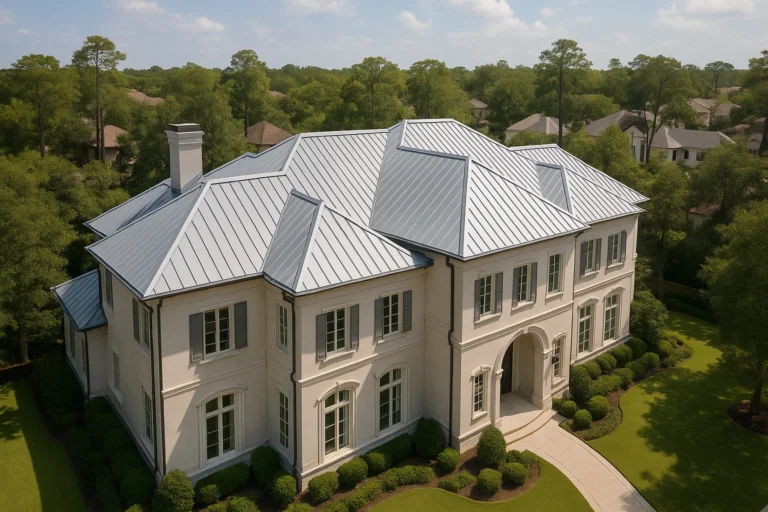
Quality Metal Roofing

When it comes to roofing options in Texas, metal roofing has quickly become one of the most popular choices among homeowners. Known for its strength, durability, and stylish appearance, metal roofing offers exceptional protection from the intense Texas heat, wind, rain, and occasional hailstorms. At RISE Roofing, we specialize in installing various types of metal roofs suitable for residential properties throughout Texas, especially the Greater Houston and Corpus Christi regions.

Whether you’re building a new home or considering a roof replacement, understanding the different types of metal roofing available can help you make the best decision for your home. Below, we outline the most popular metal roofing materials, along with their features, advantages, and considerations.

Types of Metal Roofs We Install

Mediterranean-style home in Jordan Ranch, TX with a red Spanish tile-look stone-coated steel roof installed by RISE Roofing

Stone-Coated Steel (​DECRA & Tilcor)

If you love the depth of tile or shake but need Houston-ready strength, stone-coated steel is the sweet spot. DECRA and Tilcor embed natural stone granules into 26-gauge galvanized panels and back the system with a 50-year limited, transferable warranty that even covers 120 mph wind uplift and Class 4 hail impact. 

Aesthetics. Deep-pressed profiles, rich matte colors, and granulated textures deliver the curb appeal of clay or cedar without the weight, so existing rafters rarely need reinforcement.

Cost. Up-front pricing lands between architectural asphalt and clay tile, but the half-century warranty and near-zero maintenance drive the lifetime cost down.

Why homeowners choose it. Class A fire rating, quiet under rain (thanks to the stone surface), and energy-saving down-to-deck ventilation keep attics cooler in Texas heat.

Coastal home in Surfside Beach, TX with a blue standing seam metal roof installed by RISE Roofing

Standing Seam Steel (Factory-coated by Sherwin-Williams)

Our standing-seam panels are roll-formed, cut-to-length, and PVDF-coated at the Central States plant, not in your driveway. Factory fabrication eliminates the micro-cracks that on-site bending can introduce, so the coating flexes—not flakes—when the metal expands.

Warranty. Central States’ 40-year limited paint warranty on its CentralGuard™ SMP/PVDF systems is fully backed by Sherwin-Williams coil-coatings. 

Aesthetics. Pencil-straight seams, hidden fasteners, and 16-, 18- or 24-inch panel widths give a modern, architectural finish.

Cost & speed. Factory-finished panels arrive job-ready, slashing field labor and crane time. While standing-seam commands a ~20 % premium over exposed-fastener metal, the faster install and paint warranty even the ledger over decades.

Extras. Cool-roof pigments reflect up to 70 % of solar heat, and UL 90 wind ratings meet Houston hurricane codes.

Metal roof replacement on two-story Houston residence.

Aluminum Roofing

For coastal or chemical-plant zones where salt spray chews through steel, marine-grade aluminum is the go-to. It will never rust, even inches from the Gulf, and carries 50-year substrate and 30-plus-year PVDF color warranties from leading mills.

Aesthetics. High-definition embossing and mica-flake finishes mimic zinc or copper at a fraction of the cost, and colors stay true thanks to 70 % Kynar 500® resin.

Cost. Expect pricing comparable to premium standing-seam steel; however, the corrosion immunity means zero panel replacement down the road—huge savings for beach-side homes.

Selling points. Lightweight (⅓ the weight of steel), compatible with low-slope assemblies, and 100 % recyclable at end-of-life.

Central Northwest Roofing Contractor – Expert Metal Roof Installation

Pre-finished Steel Panels

Need metal durability on a budget? Our pre-finished ribbed and “R-panel” systems use the same Sherwin-Williams factory coatings and the identical 40-year CentralGuard™ paint warranty as our standing-seam line. 

Warranty parity. Paint, substrate, and film-integrity coverage mirror standing-seam specs; the difference is only in panel geometry and fastening.

Aesthetics. Bold ¾-inch ribs every 9 or 12 inches add rural-modern style and increase diaphragm strength.

Cost. Typically 30–40 % less than standing seam because panels are wider and mechanically fastened, making them fast to lay down on barns, barndominiums, and commercial roofs.

Why upgrade from asphalt. Even with exposed screws, you gain Class 4 hail impact resistance, Class A fire rating, and reflective pigments that can cut cooling loads up to 25 %.

Professional Assistance

We’ll walk you through side-by-side numbers—material, labor, energy savings, and the real-world value of a warranty that outlasts two or three shingle cycles. Just let us know your address, and we’ll bring full-size samples to your roof inspection.

Types of Residential Metal Roofing

Metal roofing isn’t a one-size-fits-all product – there are several types and materials to consider, each with its own look and features. Here are the most common options for your homes.

This is one of the most popular choices for residential metal roofs. Standing seam roofs feature long, vertical panels that run from the roof’s ridge down to the eaves. The seams between panels are raised (standing) and interlocked, usually with hidden fasteners, creating a sleek, continuous ridge line. This design not only looks clean and modern but also ensures that rainwater runs off efficiently with minimal chance of leaks. Standing seam panels are typically made of steel or aluminum and can be coated in virtually any color. They are prized for their high wind uplift resistance and clean appearance.

For homeowners who prefer the look of traditional shingles, slate, or clay tiles, metal can replicate these styles. Manufacturers produce metal shingles or metal tiles pressed or stamped to resemble wood shake, architectural shingles, or Spanish tile, among other designs. They are often made of steel or aluminum and finished with durable coatings (including stone-coatings for a textured look). These offer the aesthetic appeal of classic roofing materials but with the added strength and longevity of metal. Metal shingles are installed in pieces like their asphalt or tile counterparts, but they lock together and get fastened to the roof deck, forming a weathertight barrier.

Corrugated metal (with wavy or ribbed patterns) has been used for ages on agricultural and industrial buildings, but is also an option for homes, especially in rural or rustic settings. These panels are usually made of galvanized steel and have exposed fasteners. While not as sleek as standing seam, modern corrugated panels still offer solid durability and a distinctive look at a lower cost. They are often chosen for porches, sheds, or accent roofing (like over bay windows or awnings) as well.

In addition to styles, you have a choice of metal materials.

Steel coated with zinc to prevent rust. It’s strong, affordable, and the most common material for metal roofs. A variation is Galvalume (steel coated with aluminum and zinc) for even better corrosion resistance.

Aluminum roofing is lightweight and naturally rust-resistant, making it ideal for coastal homes or other high-humidity areas. It’s slightly softer than steel but holds up well and doesn’t need a protective coating to resist rust (though it’s usually painted for color).

This is essentially a hybrid: metal panels (usually steel) coated with a layer of stone granules. These roofs often look very similar to asphalt shingles or concrete tiles from the ground. The stone coating adds weight and sound dampening and gives a more traditional look while still delivering metal’s durability.

Copper roofs are a premium option, known for their beauty and extremely long life. Copper starts shiny-bronze and weathers to a green patina over decades. It’s highly durable and resistant to corrosion. Copper is often used for decorative accents or special architectural homes due to its higher cost.

Zinc roofing is another high-end choice. It has self-healing properties (minor scratches can reseal over time) and develops a protective patina. Like copper, it’s long-lasting and often chosen for distinctive architectural style.

Each metal roofing type has its advantages. The best choice depends on your home’s design, your budget, and your aesthetic preferences. RISE Roofing can walk you through these options, showing samples and explaining the differences, so you can select the ideal metal roof for your needs.

Longevity and Durability

One of the biggest reasons homeowners switch to metal roofing is for its exceptional longevity and durability. A correctly installed metal roof can protect a home for multiple decades, outlasting more common roofing materials by a wide margin. Here’s what to expect in terms of durability and lifespan.

Most metal roofs have a life expectancy of 40-70 years, depending on the material. Steel and aluminum roofs often come with 40-50 year warranties and can last at least that long. High-end metals like copper and zinc can easily last 80-100 years or more. This means if you install a metal roof, it’s probably the last roof you’ll need on your home. The long lifespan adds value to your property and can make up for the higher initial cost over time.

Metal roofs are engineered to handle tough weather. They’re highly wind-resistant; many are tested to withstand hurricane-force winds. Because the panels interlock and are securely fastened, there’s little chance of pieces breaking off in a storm (unlike shingles which can tear off). Hail resistance is generally good — while very large hail can dent a metal roof, it’s unlikely to puncture it, and many steel roofs have Class 4 hail impact ratings (the highest level). Plus, if cosmetic dents do occur, they usually don’t affect the roof’s waterproof integrity. For areas with heavy snow, metal’s slick surface sheds snow quickly, reducing excessive weight on the roof.

Metal roofing is non-combustible, which means it won’t catch fire from sparks or embers. If wildfire or a neighbor’s fire is a concern, a metal roof provides an extra measure of protection. Most metal roofs carry a Class A fire rating (when applied over appropriate underlayment), the highest rating available.

A common concern is whether metal roofs will rust. The good news is that modern metal roofing materials are designed to resist corrosion. Galvanized steel is coated with zinc or zinc-aluminum to prevent rust, and paint finishes add another layer of protection. Aluminum, copper, and zinc roofs are inherently rust-proof. As long as you choose a quality metal product appropriate for your environment (for instance, aluminum in coastal areas to avoid salt corrosion of steel), corrosion is not a problem. Manufacturers often warranty their panels against rust for decades.

Unlike asphalt shingles that gradually lose granules or dry out over time, metal doesn’t suffer from UV degradation or organic decay. The color finish on painted metal roofs is usually warranted against fading or chalking for 20-40 years. Even after that, the fading is gradual and doesn’t affect performance (you can repaint the roof later to refresh it, if desired).

Metal roofs cannot be damaged by insects or rodents, and their hard, inorganic surface offers no foothold for mold, moss or fungus growth. This keeps the roof looking clean and functioning properly, whereas other roof types might need moss removal or pest control over time.

Cost Considerations

While the benefits of metal roofing are impressive, it’s important to discuss the cost. Metal roofing generally costs more upfront than traditional asphalt shingles, but homeowners often find that the long-term value justifies the investment. Here are key cost-related points to consider.

Upfront, a metal roof can cost roughly 2-3 times as much as an asphalt shingle roof for the same house. This is due to both material and labor. Metal panels or shingles are specialized products that are more expensive to manufacture. Installation is also more specialized and time-consuming in some cases, which can increase labor charges. However, it’s worth noting that there is a range of metal roofing options – simpler designs like corrugated panels are closer in cost to upscale asphalt shingles, whereas standing seam or copper roofs are at the high end.

When evaluating cost, consider that a metal roof’s longevity means you likely won’t be paying for another roof anytime soon. If you plan to stay in your home for a long time, a metal roof can be more cost-effective over the decades. Even if the upfront cost is higher, not having to replace the roof in 20-25 years (as you would with shingles) can save money in the long run. Additionally, metal roofs often increase a home’s resale value, and prospective buyers may appreciate that the roof won’t need replacement for a very long time.

As mentioned in the benefits, metal roofs can reduce cooling costs due to their reflective properties. Over the years, these energy savings can help offset a portion of the initial roofing cost, effectively giving you some return on investment in monthly savings.

In some regions, having a metal roof may qualify you for lower home insurance premiums. This is because metal roofs are very fire-resistant and hold up well against hail and wind, which means less risk of damage. It’s worth checking with your insurance provider; any potential discount could further improve the cost-effectiveness of a metal roof.

Metal roofs generally require less spending on maintenance or repairs over their life. You won’t have to replace shingles or deal with frequent leak repairs. While it’s wise to budget for a professional inspection every now and then, the expected upkeep expenses are minimal. Also, many metal roofs come with long warranties (often 30-50 years for the product), which can include

In some cases, installing a metal roof over an existing roof can save on removal and disposal costs of the old roofing. If your current roof is a good candidate for this (only one layer of shingles, decking in good shape), RISE Roofing can discuss whether this approach is feasible, which could trim down the overall project cost.

Ultimately, while a metal roof is an investment, it’s one that pays back in durability, longevity, and reduced ongoing costs. At RISE Roofing, we provide detailed, transparent estimates so you can see the cost breakdown and make an informed decision. We also strive to offer competitive pricing and can discuss financing options to make a high-quality metal roof accessible for your budget.

Maintenance Tips

One of the appealing aspects of metal roofing is how low-maintenance it is. Still, any roof benefits from a little care to ensure it remains in top condition throughout its life. Here are some maintenance tips to keep your metal roof performing and looking its best.

Periodically (perhaps twice a year, such as spring and fall), look at your roof from the ground or use binoculars. Check for any signs of damage like bent or loose panels, missing or out-of-place fasteners, or accumulated debris. Because metal roofs are durable, you likely won’t find issues, but it’s good to keep an eye out after major weather events.

Remove any leaves, twigs, or branches that may collect on the roof or in the valleys. Debris can trap moisture and cause scratches on the painted finish if moved around by wind. Usually, rainfall will wash most debris off a steep metal roof, but you might occasionally need to clear out gutters and downspouts so they flow freely. Clogged gutters can cause water to back up, which isn’t a huge problem for metal (since it won’t rot) but could affect other parts of your home.

If damage is spotted – say an HVAC contractor dropped a screwdriver and punctured the membrane – it’s important to repair it soon. TPO is relatively easy to patch by a professional: we clean the area and heat-weld a patch of new TPO over the hole. Because it’s welded, the patch becomes part of the roof. Timely repair prevents water from getting under the membrane and causing bigger problems. We advise clients to let anyone who works on the roof know to report any accidents (like a dropped tool or a spill) so that we can come fix it. Often these repairs are quick and not costly, especially if under a maintenance contract.

If your metal roof develops some dirt or stains over time (perhaps from pollen, bird droppings, or nearby trees), you can wash it with a garden hose and a mild detergent solution. Avoid abrasive cleaners or tools that could scratch the finish. Generally, metal roofs maintain their appearance well with just rainfall, but a cleaning every few years can keep it looking like new.

If you ever notice a small issue, such as a spot where the paint is scratched down to bare metal (perhaps from a fallen branch), it’s a good idea to touch it up with a manufacturer-approved touch-up paint to prevent that spot from starting to corrode. Likewise, if by rare chance a panel or flashing gets a minor bend or comes a bit loose, have it fixed sooner rather than later. Small problems on a metal roof are easy to correct, but if left unattended, they could lead to bigger issues (like a loose flashing allowing a leak during wind-driven rain).

Minimize walking on your metal roof to only when necessary (like checking something or retrieving an item). While metal can generally handle foot traffic (especially if you step in the right spots, like along purlins or truss lines), unnecessary walking can potentially cause dents or scuffs. If you need rooftop work (e.g., gutter repair, chimney service), try to hire professionals who know how to walk on metal roofs safely or have proper gear to do so.

In areas with heavy snowfall, metal roofs shed snow quickly, which is great for reducing weight on the roof. However, large sheets of sliding snow can be dangerous to people or property below. If your home is in such an area, consider adding snow guards or snow retention systems on your metal roof. These devices hold the snow in place to let it melt more gradually or break into smaller pieces. They should be installed by professionals to ensure they don’t compromise the roof integrity.

Overall, caring for a metal roof is straightforward and not labor-intensive. By following these simple practices, you’ll help ensure your metal roof stays leak-free and beautiful for its full lifespan. And remember, RISE Roofing is always here to assist with routine maintenance or inspections to keep your investment in peak condition.

Why Choose RISE Roofing for Your Metal Roof

Selecting the right contractor for a metal roofing project is crucial to its success. Metal roofing installation requires precision and expertise that not all roofing companies possess. Here’s why RISE Roofing is the smart choice for your residential metal roofing needs.

Our installers have specialized training and extensive experience with a variety of metal roofing systems, from standing seam to metal shingles. We understand the nuances of working with metal – such as allowing for thermal expansion, avoiding scratches, and ensuring a weather-tight seam. With RISE Roofing, you can be confident your roof will be installed correctly to meet the highest industry standards.

We source our metal roofing products from reputable manufacturers known for quality and innovation. Whether it’s high-gauge galvanized steel panels with advanced paint coatings or durable aluminum shingles, we make sure you’re getting materials that will perform exceptionally on your home. We can offer options that fit your budget and style, all without compromising on quality.

Every home is different. Our team takes the time to assess your home’s structure, roof pitch, and design to recommend the best metal roofing solution. We handle all the custom metalwork (like flashing and trim pieces) in-house or through trusted partners, so every piece of your roof system is made to fit perfectly. The result is a roof that not only works great but looks great, with all the finishing touches seamlessly integrated.

From the initial consultation to the final walkthrough, we prioritize clear communication. We’ll answer all your questions about metal roofing, keep you informed on scheduling, and update you on progress. Installing a new roof is a significant project, and we strive to make the experience smooth and stress-free. Our many satisfied customers often remark on our professionalism and the care we take with their homes.

RISE Roofing stands behind our work. We provide robust workmanship warranties on our installations, in addition to the substantial manufacturer warranties that come with the metal roofing materials (many metal roofs have 30-50 year limited warranties). If you ever encounter an issue, even years down the line, you can rely on us to be responsive and helpful. Our commitment is to ensure your roof continues to perform and that you remain completely satisfied with the results.

As a fully licensed and insured roofing contractor, RISE Roofing gives you peace of mind that your home is in good hands. We adhere to all building codes and safety regulations. Our crews treat your property with respect, ensuring that the work site is safe and tidy. Your trust and safety are our top priorities throughout the project.

When you choose RISE Roofing for your metal roofing project, you’re choosing a partner dedicated to excellence. Our blend of skill, top-notch materials, and customer-focused service ensures that your new metal roof will provide lasting protection and beauty for your home. We take pride in doing the job right, so you can enjoy all the benefits of your metal roof without worry.

Metal Roof Installation FAQ

Why choose standing seam metal roofing for a home in Houston or Corpus Christi?

Standing seam metal roofs are extremely durable, energy-efficient, and ideal for the Texas climate. They withstand heavy rain, hail, and hurricane-force winds, making them perfect for homes in storm-prone areas like Corpus Christi. In Houston, they reflect sunlight to reduce attic heat and lower cooling costs. They also offer sleek, modern aesthetics and long-term protection with minimal maintenance.

How long does a standing seam metal roof last?

Standing seam metal roofs last 40 to 70 years or more with proper installation and care. They're resistant to UV damage, rust (when using Galvalume or aluminum), and wind uplift. This makes them one of the longest-lasting roofing systems available for residential homes in Texas.

What styles and colors are available for standing seam roofs?

Standing seam panels come in a variety of widths, seam heights, and concealed fastening systems. Color options include natural metal tones, charcoal, bronze, black, white, red, and many custom colors. All finishes are fade-resistant and meet ENERGY STAR® reflectivity standards. We’ll help you choose the best style for your home’s architecture and HOA requirements.

How does the cost of standing seam metal compare to shingles?

Standing seam metal roofs generally cost 2 to 3 times more than asphalt shingles upfront — typically $10–$14 per square foot installed. However, the system lasts 2–3 times longer, often pays off in energy savings, and increases home resale value. Many homeowners recoup their investment through insurance discounts, lower A/C bills, and reduced maintenance.

Are standing seam metal roofs noisy during rain or hail?

No. When properly installed over solid decking and insulation, standing seam roofs are no louder than shingles. The myth of ‘noisy metal roofs’ often comes from barns or sheds with exposed panels and no underlayment. RISE Roofing uses sound-dampening layers to ensure quiet indoor environments, even during heavy rain.

Are metal roofs allowed in HOA neighborhoods?

Yes — in most cases. Standing seam metal roofs are often approved by HOAs because they provide a high-end appearance. We offer panel styles and colors that meet or exceed HOA standards. We’re happy to help with the submittal process by providing spec sheets, renderings, and photos for approval.

How energy-efficient is a standing seam metal roof?

Very. Metal reflects solar radiation and emits absorbed heat faster than asphalt shingles. This reduces attic temperatures and cooling load. In hot climates like Houston, homeowners can save up to 25% on energy bills. Cool roof coatings and light-colored finishes further improve performance.

Does a standing seam roof qualify for insurance discounts?

Yes. Many insurers offer discounts for Class 4 impact-rated roofs, and standing seam systems can qualify when installed with proper underlayment and decking. These systems also resist fire and wind, which may reduce premiums. We’ll help provide all documentation needed for your insurer.

What kind of maintenance does a standing seam metal roof require?

Metal roofing is low-maintenance. We recommend inspecting flashings, fasteners, valleys, and sealants every 2–3 years. Debris should be cleared from gutters and roof surfaces periodically. RISE Roofing offers maintenance plans and inspections to keep your system under warranty and performing like new.

Can solar panels be installed on a standing seam metal roof?

Yes. Standing seam roofs are one of the best surfaces for solar panels because they allow clamp-on mounting without penetrating the roof surface. This preserves your roof warranty and prevents leak points. We coordinate with solar installers to ensure proper layout and attachment to the standing seams.

RISE Roofing sales manager holding tablet offering roofing consultation

Speak with a Roofing Professional

Request a Callback

We understand your busy schedule, so we make getting a new roof a stress free process.

Over our 10 minute call — we’ll discuss any specific roofing requests, style, and color options. After the call we’ll send you all the information we discussed to assist with any decisions. 

In 24-48 hours, we’ll hand deliver or email a free no-obligation price-locked quote.

Click the button below to schedule a call and let’s get started! 

Raising Standards, One Roof at a Time

RISE Roofing LLC is a Licensed Registered Texas Roofing Contractor, providing roofing services in Houston, Greater Houston, & Corpus Christi, Texas.