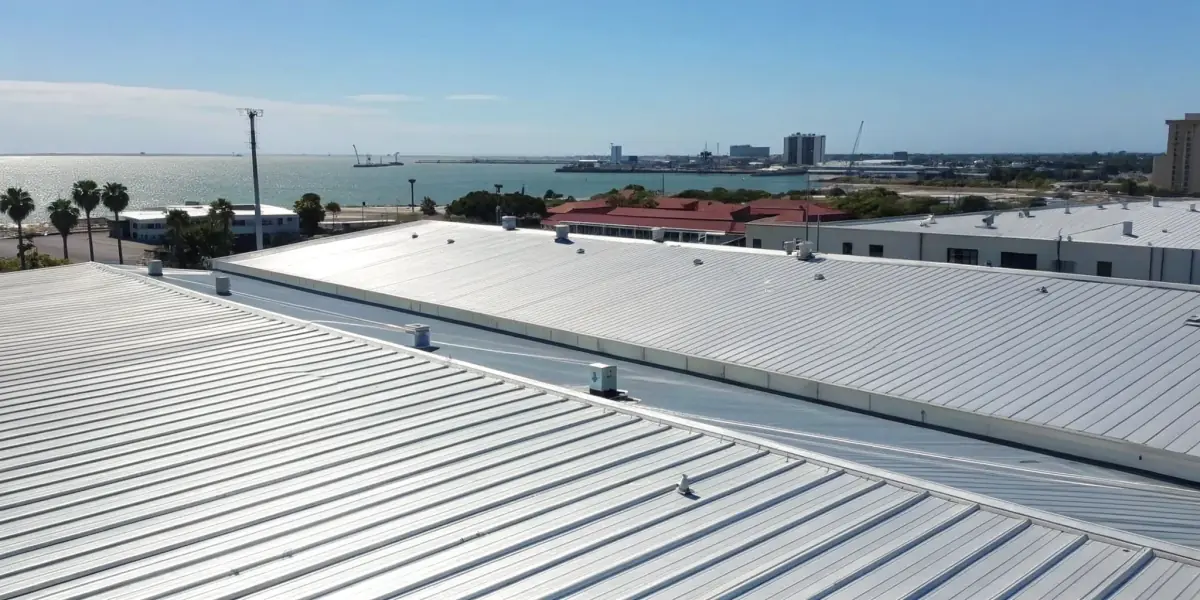
Quality Commercial Metal Roofing Solutions

At RISE Roofing, we’re your go-to specialists for commercial metal roofing, serving businesses across Texas, from Corpus Christi to Houston, and surrounding cities. Our big selection of  commercial metal roofing options are tailored to meet the needs of all commercial properties, delivering durability, energy efficiency, and aesthetics.

Our Partners in Commercial Metal Roofing

Sherwin-Williams partner badge highlighting RISE Roofing’s factory-applied PVDF metal roof coatings
Badge displaying Commercial Metal Roofing Manufacture Partner

Commercial Metal Roofing Benefits

Built for Longevity

Our commercial metal roofing systems are designed to stand the test of time. Constructed from high-grade steel or aluminum and protected with industrial coatings, these roofs offer superior resistance to corrosion, extreme weather, and wear.

Energy-Efficient Performance

Commercial metal roofing with reflective coatings helps reduce thermal absorption, lowering cooling costs in hot climates. These coatings maintain their reflectivity for years, making commercial metal roofing an investment in ongoing energy savings.

Low Maintenance & Easy Repairs

Unlike traditional roofing materials, commercial metal roofing requires minimal upkeep. Quick repairs and replacements can be executed by certified professionals without disrupting your operations.

Commercial Metal Roofing Services

Coastal & Windstorm Expertise

Serving Corpus Christi and other coastal communities, we understand the demands of high wind and salt exposure. Our commercial metal roofing systems meet or exceed wind-load standards for coastal properties.

Custom Metal Installations

We offer a wide selection of metal profiles—like standing seam, corrugated, and stone-coated steel—in multiple colors and finishes. Each is engineered for optimal performance in commercial environments.

Retrofit & Re-Roof Metal Projects

RISE Roofing specializes in retrofit solutions, installing metal roofing over existing structures to cut costs and downtime. We excel in commercial metal roofing for re-roofing existing facilities, improving durability while minimizing disruption.

Comprehensive Support

From initial design and material selection to installation and inspections, we provide full-service expertise in commercial metal roofing. Our team will assist with budgeting, scheduling, custom fabrication & design.

Commercial Metal Installation Options

Commercial metal roofing isn’t one-size-fits-all; there are various types of metal roof systems to choose from, each with its ideal applications.

This is often considered the premium commercial metal roofing system for commercial buildings. Standing seam roofs feature long metal panels that run vertically on the roof, with seams that stand up vertically and interlock, concealing the fasteners. The seams are raised above the panel level (hence “standing”), which means water runs off without encountering the fastener penetrations. The panels are typically attached with clips that allow for thermal expansion and contraction. Standing seam roofs are extremely weathertight and have a clean, modern appearance. They are common on large commercial roofs, architectural projects, and any application where performance and look are both paramount.

R-Panel & Corrugated

These metal panels also run vertically but have overlapping ribs where they are fastened directly through the panel into the structure (meaning the screw heads with rubber washers remain visible). Examples include R-panels (often used on industrial buildings) or classic corrugated metal. They are generally less expensive than standing seam because they’re quicker to install and use fewer accessories. They offer excellent durability, though the exposed fasteners mean there are more points (hundreds of them on a roof) that could potentially require re-sealing or tightening over time. These systems are well-suited to warehouses, barns, and large sheds – anywhere the rugged utility aspect is more important than high-end aesthetics.

For buildings that want the look of shingles, slate, or tile but the strength of metal, there are metal roofing products formed into shingle or tile shapes. These often interlock and are fastened to the roof deck. They are more common in residential or specialty commercial metal roofing applications (like a restaurant or small office that wants a distinctive look). They offer the longevity of metal with stylistic versatility. However, they can be more labor-intensive to install over large areas compared to sheet panels.

Steel & Aluminum

The most common commercial metal roofing material is steel, usually galvanized (zinc-coated) or Galvalume (zinc-aluminum alloy coated) to prevent rust. Steel is strong, relatively affordable, and holds paint finishes well. Aluminum is another option; it’s lighter and naturally rustproof, making it great for coastal environments where salt spray could corrode steel. Aluminum is a bit more expensive than steel. There are also high-end materials like copper or zinc used in specialty architectures – these develop a patina and can last even longer, but are premium choices. For most commercial metal roofing needs, coated steel or aluminum panels provide the best balance of cost and performance.

These are composite panels that have metal faces and insulation foam core sandwiched in between. They provide both the roof (or wall) surface and insulation in one unit. IMPs are often used on industrial or cold storage buildings, or anywhere one wants a very high insulation value and fast installation. They lock together in a standing seam-like fashion. They can be costlier per square foot, but you save on separate insulation installation. RISE Roofing can install these as well when a project calls for it.

While not a “type of metal roof” per se, it’s worth mentioning – there are systems to add a sloped metal roof over a flat roof by using a light-gauge steel framing to create a pitch. This is an option for buildings with chronic flat roof issues that want to transition to a sloped metal roof without rebuilding the whole roof structure. The new metal roof sits above the old flat roof, creating a pitched plane for water to run off. We have experience with such retrofit systems, which can be a great solution for some scenarios.

RISE Roofing will help determine the best type of metal roof for your building. Factors include the roof’s slope, the building’s purpose, climate, and budget. Whether it’s the sleek look of a standing seam or the cost-effective strength of an R-panel, we will ensure you get a commercial metal roofing system that meets your specific goals.

Commercial Metal Roofing Installation Process

Installing a commercial metal roof is a craft that requires precision and expertise. Here’s an overview of how RISE Roofing approaches metal roof installations.

If it’s a re-roof project (replacing an existing roof with metal), we first assess the structural support to ensure it can handle a metal roof if it’s heavier than the old system (most of the time, metal is lightweight so it’s not an issue). We take detailed measurements of the roof, including length of runs, spacing of purlins or rafters (for new construction), locations of penetrations, etc. We also determine the desired panel layout so that we can order appropriate lengths of panels (many standing seam panels are cut to full length from ridge to eave to avoid horizontal seams).

For a new building, we ensure the roof deck or purlin structure is ready. For a re-roof, we remove the old roofing down to the substrate, unless it’s a retrofit over an existing flat roof (in which case we might install a framing system over the old roof). If tearing off to a deck, we’ll check the decking condition and fasten any loose sections, replacing any that are compromised. A clean, solid deck (or framing) is critical for a good metal roof install.

Before the new metal panels are installed, we install a high-quality roofing underlayment over the entire roof deck. This is a moisture barrier (often a synthetic breathable underlayment or a self-adhered membrane in critical leak areas) that provides secondary protection under the metal. It also helps manage condensation that might form under the panels. We overlap and seal the underlayment carefully, especially at ridges, eaves, and valleys.

Metal roofs rely on a proper flashing system. We install drip edge flashings at eaves (to guide water off and protect the edge of the underlayment) and possibly starter cleats (for standing seam) or closure strips. At this stage, we also install any valley flashings (in case of roof sections that intersect), and flashings around penetrations that need to go in before the panels (like a base flashing around a chimney or curb). These flashings are typically crafted from the same material and color as the roof for a uniform look.

Now the main panels are installed. For standing seam, if using factory-cut lengths, we align each panel and secure it with clips to the deck/purlins. The next panel locks into the seam of the previous one, hiding the clips. We continue this sequence across the roof. For exposed fastener panels, we lap each panel over the prior and screw them down in the ribs to the structure. It’s crucial to follow the pattern and spacing of fasteners specified (to meet wind uplift requirements). Panels are cut as needed at the ends or around obstacles, using metal shears or specialized cutting tools to get clean cuts without damaging the panel’s finish.

For standing seam, some systems require seaming the panels (using a mechanical seamer) to lock them if they’re two-piece standing seams. We ensure every seam is fully engaged and locked. For exposed fastener roofs, we go back and check all screws are properly seated with washers compressed just right (not over-tightened to squash the washer, and not under-tightened). We also place foam closures or sealant tape under panel overlaps and at ridge/eave lines as needed to seal gaps (since metal panels are corrugated, these closure pieces fill the voids to prevent wind-driven rain or pests from getting in).

Once all field panels are on, we install the ridge cap (on a gable roof) or hip caps (for roofs with multiple slopes). Beneath these, we often place ventilation material or closure strips. The ridge cap is fastened down, tying together the two slopes and providing a finished look as well as waterproofing the top of the roof.

We complete the installation of any remaining flashings, such as sidewall flashings (where a roof meets a wall), headwall flashings (at the top of a slope against a wall), and counterflashings. Everything is sealed appropriately. For penetrations like pipes, we use specialized metal roof pipe boots – flexible flashings that mold to the panel shape and are clamped around the pipe. All these details are critical; a majority of roof leaks happen at details, so we take our time to do them correctly. We often use high-grade sealants (neutral-cure silicone or polyether sealants) that are compatible with metal and have long life, to seal joints where needed.

A metal roof installation will generate metal shavings and bits from cutting and drilling – we clean these thoroughly because if left, they can rust and stain the roof. We gather all unused screws and materials and ensure the roof and gutters are free of debris. Then we do a detailed inspection: checking every flashing, ensuring no screw is missed, verifying that panel alignments are straight and visually appealing, and testing that any integrated components (like motorized ridge vents or snow guards, if used) are secure.

Finally, we walk the client (or representative) through the finished roof if they wish. We point out key features, and we provide guidance on maintenance – which for metal is simple, but we might say things like “try not to let different metals touch the roof to avoid galvanic reaction” or “keep the gutters clean for proper drainage.” We also hand over warranty information for the material (many metal roofs have paint finish warranties, etc.) and our workmanship warranty.

Retrofitting and Metal Roof Replacement

Many commercial clients come to us not for new construction, but to upgrade an existing roof to metal. There are several scenarios and we provide great solutions for this.

If you have a flat roof that’s been troublesome (with leaks, ponding water, etc.), one option is to retrofit a sloped metal roof over it. As mentioned before, this involves installing a light steel framing system that creates a pitched structure over your building, then adding metal panels on top. We ensure the new structure ties into the old one securely and that load considerations are accounted for. The benefit of this approach is you get a brand new sloped roof (so water finally drains well) without doing a full tear-off of the interior. The old roof can remain in place as a base. The new metal roof covers it like a lid. This can be done with minimal disruption to the inside of the building.

If your building already has an older metal roof that’s nearing end-of-life (perhaps rusting or leaking at seams after decades), we can replace it. Depending on the structure, sometimes we remove the old panels and install new ones on the existing purlins/structure. Other times, we may install new underlayment or even new sub-framing if we want to change the panel type or correct some issues. The replacement process is similar to a new install, but extra care is taken in removing the old roof to not expose the interior to weather for long. We may do it in sections, keeping the building waterproof as we go.

For buildings that have a steep slope roof currently with asphalt shingles (some commercial buildings or multifamily units), it’s possible to install metal over the shingles (if local codes and roof structure allow) using an overlay method. Often this involves putting down underlayment over the shingles and then metal on top. However, for the best result, we usually recommend removing old shingles to inspect the deck, then proceeding with metal installation. This gives a cleaner substrate.

In some cases, only part of a roof will be converted to metal. For instance, an office building might have a flat central roof (which remains a membrane) but decide to add metal mansards or a metal edge for aesthetics. We are experienced in tying metal sections into other roofing systems. Proper flashing between the two systems is essential to prevent leaks at the transitions.

With any retrofit or replacement, planning and phasing are key to minimize disruption to ongoing operations. RISE Roofing will develop a plan so that your building isn’t left exposed to rain. We use temporary waterproofing or schedule work around weather to ensure a smooth transition. Our experience in these projects is extensive, so we foresee challenges and solve them proactively (like handling areas where old and new systems meet, or adapting to peculiarities of older structures).

Maintenance for Metal Roofs

Metal roofs are low-maintenance, but “low” doesn’t mean “none.” To get the full lifespan (and to uphold warranty conditions), a bit of upkeep is wise.

We recommend a annual inspections for metal roofs. This involves checking for any loose fasteners (on exposed fastener roofs, screws can occasionally back out slightly due to thermal movement – we re-tighten or replace any that are not snug). We also inspect flashing areas for any signs of issues, and look at sealant in places where it was used (sealants can degrade after many years due to UV exposure and may need reapplication).

Especially in areas with trees or in fall seasons, debris can accumulate in valleys, gutters, or behind HVAC units on the roof. While metal roofing itself sheds debris quite well, any that does collect should be removed to prevent moisture retention and avoid any potential for corrosion. Clearing leaves and dirt off also keeps the roof looking good.

If your metal roof has gutters, keeping them clean is essential. Clogged gutters can back up water which could then seep into the eaves or cause localized overflow issues. Metal roofs tend to shed water quickly, so gutters see a lot of volume in heavy rain – they should be sized appropriately (which we account for in design) and kept clear.

Over the decades, the factory finish (paint) on metal panels may start to chalk or fade a bit, especially on certain exposures. This is normal and mostly aesthetic. Most panel finishes are warrantied for a certain period against excessive fade or chalk. If after, say, 20-30 years you’re not happy with the look, metal roofs can be repainted with specialized coatings to restore their appearance. This is optional and typically not needed until far into the roof’s life, if at all. However, if you notice any scratch that goes to bare metal (rare, unless something sharp dragged across it), let us know – we can touch it up to prevent any corrosion at that spot.

Although major problems are unlikely with a metal roof early on, if you do notice something – perhaps a piece of flashing got bent in a storm or you spot a small leak – call us promptly. Fixing an issue in a metal roof is usually straightforward (tightening something, adding a bit of sealant, or replacing a damaged section), but delaying can allow water to cause secondary damage or rust to develop if the coating was compromised.

One advantage of hiring RISE Roofing for maintenance is that we know how to care for metal roofs without causing harm. For example, walking on a metal roof should be done carefully to not dent panels (we know where to step, like on ribs or over supports). If any sealant needs refreshing (like at roof jacks every 5 years), we use the right materials. We treat your roof with the same care we did when installing it.

Why Roof with RISE?

Selecting RISE Roofing for your Commercial Metal Roofing project means partnering with a contractor that has metal   expertise and the workmanship commitment required for any metal project.

Metal roofing installation has nuances that not all roofing contractors handle daily, but we do. From using proper seaming techniques to custom-fabricating flashings, our team is skilled in the metal trade. We have technicians with sheet metal craftsmanship backgrounds, which is crucial for those tricky detail areas. This expertise leads to a smoother installation and a better-finished product.

We use high-grade metal roofing materials from reputable manufacturers. Whether it’s panels, clips, underlayments, or fasteners, every component is top quality. We often work with suppliers like MBCI, Englert, Firestone UNA-CLAD, and others, who provide excellent metal roofing systems. Through these partnerships, we can offer strong material warranties and a wide selection of styles and colors. You’re not limited to one brand or one look – we tailor the solution to your preferences and the building’s needs.

We understand that a metal roof is a big investment. We take the time to answer all your questions, provide options, and ensure you feel comfortable every step of the way. If you want to see sample panels or a portfolio of our past metal roof projects similar to yours, we’ll provide that. We strive to build trust not just through words, but by being transparent, responsive, and reliable in all our interactions.

Our crew is trained to work on high or steep roofs safely. We employ safety harnesses, guardrails, and follow strict protocols when necessary. This is important not just for our workers’ safety but also for the project – it means there won’t be accidents that could delay the job or cause liability concerns. We’re fully insured, giving you peace of mind while we’re on the job site.

Beyond functionality, we know that the look of a metal roof is often a selling point. We pay attention to things like aligning panels perfectly, cutting neatly around penetrations, and ensuring flashings are not only sealed but also neatly installed. The result is a roof that not only works great but also adds a crisp, professional look to your building. Many clients are pleasantly surprised at how much a new metal roof can elevate the visual appeal of their property.

While metal roofing is a premium product, we aim to make it a valuable investment for you. Our pricing is competitive and we work hard to avoid waste and inefficiencies that could cost you more. By doing it right the first time and working efficiently, we ensure you get the best value for every dollar spent. Additionally, we help you consider the long-term savings (like reduced maintenance and energy savings) to factor into the value proposition of a metal roof.

We have hundreds of satisfied clients who can vouch for our workmanship and service. From small business owners to large facilities managers, our metal roofing clients have seen firsthand the RISE Roofing difference. We’re happy to provide references if you’d like to hear directly from them.

Commercial Metal Roofing FAQ

What are the benefits of replacing my roof with metal in Houston or Corpus Christi?

Metal roofs are extremely durable, energy-efficient, and storm-resistant, making them ideal for homes and commercial buildings in Houston and Corpus Christi. They reflect solar radiation, reducing heat gain during hot Texas summers. Metal roofing also holds up against strong winds, hail, and hurricane conditions common in coastal areas. A properly installed metal roof can last 40–70 years, making it a smart long-term investment that improves curb appeal, reduces maintenance, and lowers energy bills.

How long does a metal roof last compared to shingles or tile?

Metal roofs typically last 2 to 3 times longer than asphalt shingles and longer than most tile systems. While shingles last 15–25 years, metal roofing systems like standing seam can last 40–70 years or more. They resist UV damage, cracking, and wind uplift. In salt-air environments like Corpus Christi, choosing rust-resistant panels (e.g., Galvalume® or aluminum) can extend lifespan even further. With proper installation and minimal maintenance, metal roofs provide decades of protection.

Is metal roofing noisy during rain or storms?

No. Modern metal roofing is installed over solid roof decking, insulation, and underlayment, which significantly reduces sound. When installed properly, it is no louder than an asphalt shingle roof during rain or hail. In fact, many homeowners are surprised by how quiet a metal roof can be. RISE Roofing ensures sound-dampening layers are part of every metal roof installation we perform in Houston or Corpus Christi.

What styles of metal roofs do you offer?

We offer multiple metal roofing styles including standing seam (concealed fastener), R-panel (exposed fastener), and stone-coated steel tiles. Standing seam is a premium option known for sleek aesthetics and superior durability, while R-panel is more budget-friendly and commonly used in residential or commercial re-roofs. Stone-coated metal provides a traditional look with metal strength. Each system is available in various colors and finishes. We help you choose based on your goals, building type, and HOA requirements.

Are metal roofs energy efficient in the Texas heat?

Yes. Metal roofs reflect radiant heat from the sun, reducing attic temperatures and energy usage during peak summer months. In Houston and Corpus Christi, where A/C costs can be high, a reflective metal roof can reduce cooling demand by 10–25%. Cool roof-certified coatings and lighter colors further enhance performance. Some systems qualify for energy rebates or tax credits. We’ll explain your options during the estimate process.

Will my insurance rate change after installing a metal roof?

In many cases, yes. Insurance companies often offer discounts for Class 4 impact-rated metal roofs, which provide better protection against hail and wind damage. Replacing your old roof with a metal system may reduce premiums and improve insurability—especially in hurricane-prone areas like the Texas Gulf Coast. Check with your insurance provider to confirm, and RISE Roofing can provide product specifications to assist with any discount eligibility.

How long does metal roof replacement take?

Most metal roof replacements take between 3 to 7 business days depending on the size, pitch, and complexity of your roof. The process includes tear-off (if needed), decking inspection, underlayment installation, and panel attachment. We work efficiently while maintaining top-tier workmanship. In Houston and Corpus Christi, we also monitor weather conditions to avoid delays or water intrusion during re-roofing.

Can you install a metal roof over existing shingles?

In many cases, yes. A metal roof can be installed over one layer of asphalt shingles if local codes permit and the existing roof is in stable condition. This can save time and labor cost. However, a full tear-off may be required if the decking is damaged or if code limits have been exceeded. We’ll inspect your roof during your free consultation and recommend the best installation method for longevity and compliance.

What kind of maintenance does a metal roof require?

Metal roofing requires minimal maintenance compared to other materials. We recommend annual inspections to check fasteners, sealant lines, flashing, and gutters. Debris should be removed from valleys and drains to prevent water backup. In coastal zones, rinsing off salt buildup can extend panel life. RISE Roofing offers maintenance plans to keep your system in warranty and performing like new for decades.

Do metal roofs add value to my property?

Yes, metal roofs are considered a premium upgrade that increases home or building value. They are sought after for their longevity, storm resistance, low maintenance, and modern appearance. Buyers recognize that a metal roof means fewer future repairs, lower energy bills, and peace of mind. For homes in Houston, Katy, The Heights, or coastal Corpus Christi, a metal roof can give your property a distinct resale advantage.

RISE Roofing sales manager holding tablet offering roofing consultation

Speak with a Roofing Professional

Request a Callback

We understand your busy schedule, so we make getting a new roof a stress free process.

Over our 10 minute call — we’ll discuss any specific roofing requests, style, and color options. After the call we’ll send you all the information we discussed to assist with any decisions. 

In 24-48 hours, we’ll hand deliver or email a free no-obligation price-locked quote.

Click the button below to schedule a call and let’s get started! 

Raising Standards, One Roof at a Time

RISE Roofing LLC is a Licensed Registered Texas Roofing Contractor, providing roofing services in Houston, Greater Houston, & Corpus Christi, Texas.