A complete roofing system is more than just shingles. Learn about the critical components.
A high-quality roof is a complete system — not just the visible outer layer.
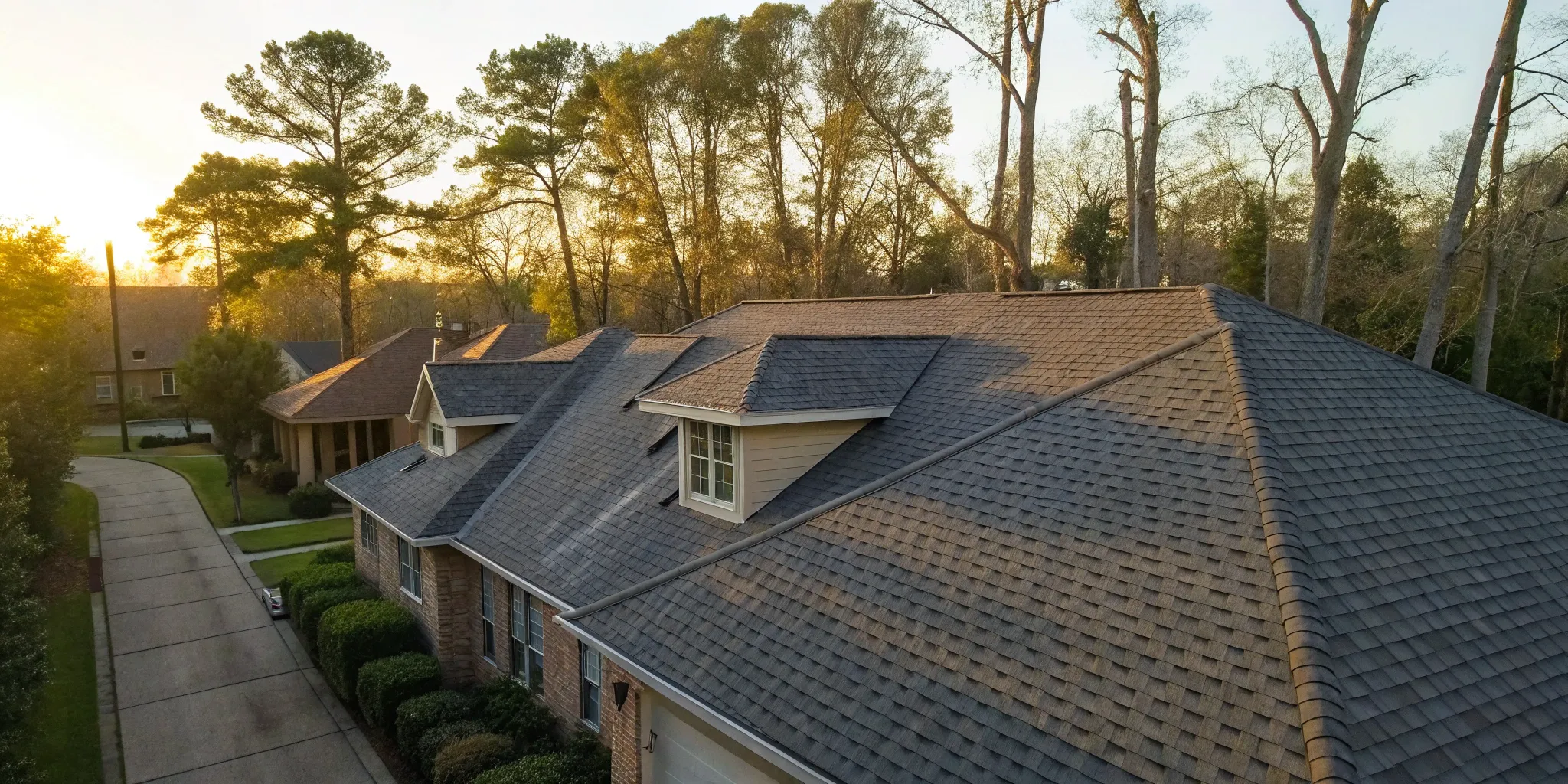
On the Coastal Bend, each roofing component faces amplified stress compared to inland Texas. Salt air corrodes metal fasteners. Wind-driven rain penetrates any gap in the system. Extreme UV degrades exposed materials faster. A roofing system is only as strong as its weakest component — and in Corpus Christi, cutting corners on any layer means premature failure.
1. Roof deck (sheathing): The structural base. Plywood or OSB panels that everything else attaches to. In coastal zones, we recommend thicker 5/8” sheathing for superior wind uplift resistance.
2. Underlayment: The waterproofing layer between your deck and shingles. We use synthetic underlayment (not felt paper) rated for extended UV exposure — critical when coastal storms delay shingle installation.
3. Drip edge: Metal flashing along eaves and rakes that directs water into gutters. In Corpus Christi, we use corrosion-resistant aluminum or galvanized steel to withstand salt air.
4. Ice and water shield: Self-adhering membrane at valleys, penetrations, and eaves. Prevents wind-driven rain from entering even if shingles lift during a storm.
5. Flashing: Metal pieces that waterproof joints around chimneys, vents, skylights, and walls. Improper flashing is the #1 cause of roof leaks in Corpus Christi.
6. Ventilation: Ridge vents and soffit vents that allow hot, moist air to escape your attic. In Corpus Christi’s heat, inadequate ventilation can raise attic temperatures to 160°F, literally cooking your shingles from below.
7. Roofing material: Shingles, metal panels, tile, or stone coated steel — the visible layer that takes the weather head-on. Material choice is important, but it’s the 6 layers underneath that determine how long it lasts.
Every RISE Roofing installation addresses all 7 components. We don’t just replace shingles and leave old, corroded flashing underneath. Our complete system approach is why we can offer the industry’s strongest warranties — because we know every layer is right. Call (361) 208-0885 for a free assessment of your roof’s complete system.
Every component of a roofing system faces specific stress under Corpus Christi's climate conditions. Underlayment, ventilation, flashing, and fastener specifications all must account for coastal salt air, hurricane-force winds, and intense UV exposure to deliver their rated lifespan.
Serving North Padre Island, Flour Bluff, Portland, Rockport, Port Aransas, and Aransas Pass, RISE Roofing provides free inspections with detailed, price-locked estimates for every residential project. TWIA (Texas Windstorm Insurance Association) coverage is required for most Coastal Bend properties. A WPI-8 certificate from a TDI-licensed inspector is mandatory after any roof installation. Contact us at (361) 208-0885 to schedule your free assessment.
Unlike inland Texas where hail is the primary threat, Corpus Christi's roofing challenges center on wind resistance, salt spray corrosion, and moisture management. RISE Roofing specifies corrosion-resistant fasteners, wind-rated attachment systems, and moisture-impermeable barriers on every project — ensuring your roof performs through decades of Coastal Bend weather.
RISE Roofing provides free, comprehensive roof assessments across the Corpus Christi metro. Every assessment includes professional photo documentation, material recommendations tailored to your property's coastal exposure profile, and a fixed-price proposal. Serving North Padre Island, Flour Bluff, Portland, Rockport, Port Aransas, Ingleside, and Annaville.
Every roofing component faces accelerated stress under Corpus Christi's conditions of salt air corrosion, hurricane winds, and coastal UV. Understanding component-level specifications helps evaluate contractor proposals:
Underlayment: Synthetic (polypropylene-based) rated for 6+ months UV exposure — critical in Corpus Christi where weather delays can leave underlayment uncovered for extended periods.
Ventilation: Enhanced 1:100 ratio (vs. code-minimum 1:150) with balanced soffit intake and ridge exhaust — sized for Corpus Christi's extreme temperature conditions.
Flashing: Step, counter, and through-wall flashing at every transition point — installed with sealant systems rated for Corpus Christi's thermal cycling range.
Fasteners: Ring-shank nails at enhanced pattern density for wind resistance. In Corpus Christi's environment, proper fastener specification prevents the most common installation failure mode.
RISE Roofing specifies every component for Corpus Christi conditions — not national averages. This systems-level approach ensures the complete assembly delivers its rated performance life.
A complete roofing system is more than just the visible surface material — it's an integrated assembly of components that must work together to deliver weatherproof performance under coastal salt air, hurricane winds, and intense UV. Each component faces specific stresses in the Corpus Christi environment, and specifying the right products for local conditions is what separates a 15-year roof from a 30-year roof.
Underlayment serves as the secondary waterproofing barrier beneath your surface material. For Corpus Christi homes, synthetic underlayment (polypropylene-based) rated for extended UV exposure is essential — weather delays during installation can leave underlayment uncovered for days, and traditional felt paper degrades rapidly under direct sunlight. Ventilation must handle attic temperatures that can exceed 150°F during Corpus Christi summers. Flashing at valleys, chimneys, skylights, and pipe penetrations must accommodate thermal expansion without cracking sealant joints. Fasteners must resist the pull-through forces generated by high winds while maintaining corrosion resistance through decades of exposure.
RISE Roofing specifies every component for Corpus Christi conditions — not national averages — ensuring the complete system performs as designed through years of coastal salt air, hurricane winds, and intense UV. Contact us at (361) 208-0885 for a free assessment that covers your roof system's complete condition.
RISE Roofing provides complimentary roof assessments for homes and commercial properties across the Corpus Christi metro — from North Padre Island and Flour Bluff to Portland, Rockport, and Port Aransas. Every assessment includes professional photo documentation, material recommendations tailored to Coastal Bend conditions, and a fixed-price proposal locked for 30 days. As certified installers for Owens Corning, DECRA, and Tilcor, we deliver manufacturer-backed warranty coverage that protects your investment through decades of coastal weather. Contact us at (361) 208-0885 or fill out the form to schedule your free evaluation.
RISE Roofing has earned the trust of Coastal Bend property owners through a combination of manufacturer certifications, TDI-compliant installations, and a track record of standing behind our work through every hurricane season. Our certifications from Owens Corning, DECRA, and Tilcor mean every installation carries manufacturer-backed warranty coverage — not just contractor promises. We specify corrosion-resistant fasteners, wind-rated attachment systems, and moisture barriers calibrated for the salt air, hurricane winds, and intense UV that define Corpus Christi's coastal environment.
Every RISE Roofing project begins with a free, comprehensive assessment — including satellite and drone measurements, material recommendations, and a fixed-price proposal with no hidden costs. We handle permit applications, insurance documentation, and manufacturer warranty registration as standard parts of our service. For Corpus Christi homeowners and property managers across North Padre Island, Flour Bluff, Portland, Rockport, Port Aransas, and the entire Coastal Bend, RISE Roofing delivers the quality and reliability that coastal properties demand. Call (361) 208-0885 to schedule your free evaluation.
Technically yes, but we don’t recommend it in Corpus Christi. If your underlayment is 20 years old and degraded from salt air, putting new shingles over it is cosmetic. The next wind-driven rain event will penetrate the compromised underlayment regardless of how new the shingles are. A proper replacement addresses the full system.
Building code resources from the NRCA.
No waiting around for multiple contractors to come bid your roof. One quick call is all it takes.
Pick any slot that works for you — online and instant.
Free video or voice call. We answer your questions and gather what we need.
We email your price-locked quote — no pressure, no sales visit.
🔒 Free, no-obligation quote — Price-locked estimate in 24 hrs
Trace your roof on satellite imagery and get a real installed price in under 60 seconds.
Powered by satellite roof measurement technology. No obligation.