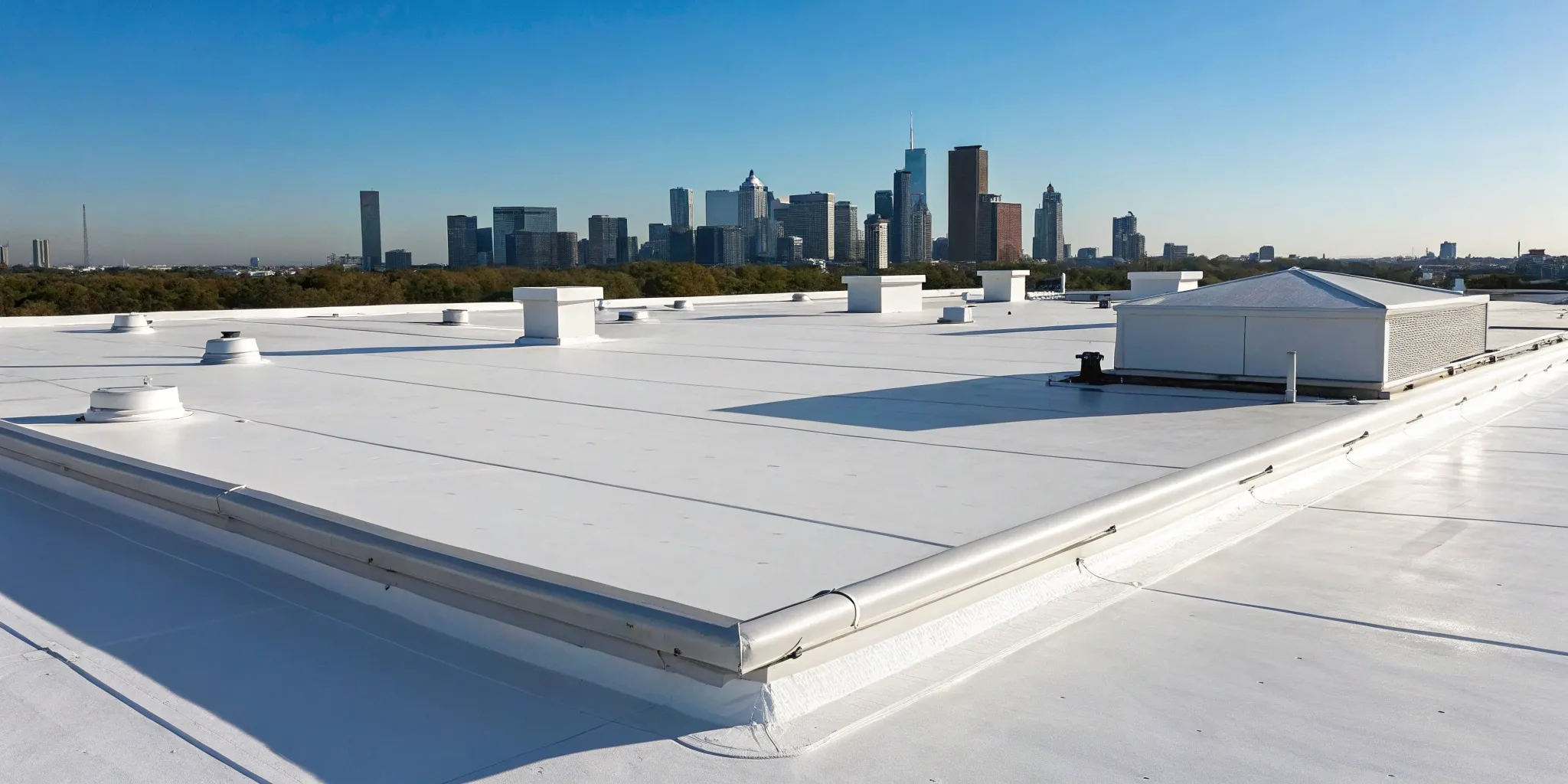
New Commercial Roof Installation

Building a new commercial facility or expanding an existing one is an exciting endeavor – and one of the most critical components of any new construction is the roof. RISE Roofing specializes in new commercial roof installation, ensuring your building starts out with a high-quality, expertly installed roof that will perform reliably from day one. Whether it’s a warehouse, office complex, retail center, or any commercial structure, our team brings the expertise and professionalism needed to get the job done right the first time. We collaborate closely with builders, architects, and owners to select and install the optimal roofing system for your project. Our focus on quality and our trust-building approach means you can have full confidence in your commercial roof installation.

Planning a New Roof for your Building

A successful new commercial roof installation begins long before the first roofing sheet is laid. RISE Roofing provides consultative planning services to ensure your new roof is perfectly tailored to your building’s needs.

Roof Design Consultation

We work with you (and your architect or general contractor, if applicable) to understand the building’s design, usage, and budget. Different facilities have different requirements – a climate-controlled warehouse, for instance, may prioritize insulation and ventilation, while a shopping center might be more concerned with aesthetics and drainage for a large flat deck. We’ll discuss these factors and help design a roof system that aligns with your goals.

Material Selection Guidance

Many roofing systems have protective coatings or surface granules (like the gravel on BUR or granulated cap sheets on modified bitumen). Over time, these layers can erode. Our maintenance The range of commercial roofing materials can be overwhelming – TPO, PVC, EPDM, modified bitumen, metal roofing, roof coatings, and more. Our experts will explain the pros and cons of each for your specific project. We consider factors like roof slope, climate, foot traffic, and long-term maintenance when recommending options. The result is you get a roofing material that fits your performance requirements and budget, with no guesswork. reapplying sealants or coatings when they start to wear thin and replacing lost gravel or granules to keep that protective layer intact. This upkeep preserves the roof’s ability to resist UV rays and water.

Budget and Lifecycle Analysis

We provide insight into not just the initial installation cost but the expected lifecycle cost of different roofing systems. A slightly more expensive material upfront might last significantly longer or save on energy bills, making it cheaper in the long run. We help you weigh these considerations. Our detailed, itemized proposals ensure you know exactly what you’re investing in, and our price-lock guarantee means you won’t be hit with unexpected charges once the project starts.

Scheduling and Coordination

New construction involves multiple trades working in tandem. We create a roofing schedule that coordinates with other aspects of the build. For example, we plan the roofing work after the structural framing is ready and any rooftop equipment curbs are in place, but also aim to “dry-in” the building as quickly as possible so interior trades can work under cover. Our project managers collaborate with your construction team to align timelines and ensure a smooth overall build process.

Permitting and Code Compliance

Roofing is subject to building codes, particularly for wind uplift, fire ratings, and insulation R-value in commercial structures. RISE Roofing stays up-to-date on all relevant codes. We handle the necessary permits and ensure the planned roofing system meets or exceeds local code requirements. By planning with code compliance in mind, we avoid any last-minute changes or issues during inspections.

Choosing the Right Commercial Roofing System

One of the biggest decisions in a new commercial roof installation is the type of roofing system to use. RISE Roofing is experienced in installing all major commercial roofing systems, and we help you choose the one best suited for your project.

These are popular choices for flat or low-slope roofs on commercial buildings.

TPO (Thermoplastic Olefin) and PVC (Polyvinyl Chloride) are white membranes known for being highly reflective (great for energy savings) and heat-weldable at the seams, creating a waterproof seal. TPO is often praised for cost-effectiveness and UV resistance, while PVC offers excellent chemical resistance (ideal if the building has grease vents or industrial chemicals). Both are low-weight and put minimal stress on the building structure.

EPDM is a black synthetic rubber membrane known for its flexibility and long life. It’s extremely UV resistant and has a long track record in commercial roofing. EPDM can be a good choice in cooler climates where its black color helps absorb some heat, or when a building owner prefers a solvent-welded or taped seam system.

Use cases: Malls, warehouses, office buildings, hospitals – essentially any building with a flat roof can benefit from single-ply systems due to their versatility and clean look. PVC is common on restaurants and airports (due to chemical resistance), TPO is widespread in general commercial use, and EPDM is often seen on large industrial facilities.

PVC (Polyvinyl Chloride) is a white membrane known for being highly reflective (great for energy savings) and heat-weldable at the seams, creating a waterproof seal. PVC offers excellent chemical resistance (ideal if the building has grease vents or industrial chemicals). Both are low-weight and put minimal stress on the building structure.


Use Cases: PVC is common on restaurants and airports, necessary for chemical resistance. 

TPO (Thermoplastic Olefin) are white membranes known for being highly reflective (great for energy savings) and heat-weldable at the seams, creating a waterproof seal. TPO is often used for cost-effectiveness, UV resistance, low-weight and put minimal stress on the building structure.

Use Cases: TPO is widely used for commercial roof installations on buildings. 

EPDM is a black synthetic rubber membrane known for its flexibility and long life. It’s extremely UV resistant and has a long track record in commercial roofing. EPDM can be a good choice in cooler climates where its black color helps absorb some heat, or when a building owner prefers a solvent-welded or taped seam system.

Use Cases: EPDM is often used on large industrial facilities.

This is an evolution of the built-up roof, using asphalt-based sheets modified with polymers for flexibility. Installed in multi-ply layers (often 2-3 layers), modified bitumen is extremely durable and handles foot traffic well.


Use cases: Smaller commercial roofs or those with many penetrations (like apartment buildings, small office complexes, or older buildings being re-roofed). It’s also a go-to for roofs that a lot of people walk on (maintenance personnel, etc.), since it resists wear. Modified bitumen performs reliably in various climates and is often chosen for its toughness.

A traditional system using multiple layers of bitumen and roofing felt, often topped with gravel. It’s heavy but very durable.


Use cases: Industrial buildings, or retrofits where a very robust roof is desired and the structure can support the weight. Many public institutions (schools, government buildings) still use BUR for its proven longevity.

In some new builds or roof-over projects, spray foam can be applied to form an insulating roofing layer, then coated for UV protection. This creates a seamless roof.


Use cases: Complex roof shapes or when a high R-value is desired directly on the roof surface. It’s less common in brand-new large constructions, but we mention it if a building owner is interested in high insulation and a monolithic layer. Usually more common in roof restoration than new construction, but it’s an option for certain designs.

For sloped commercial roofs or those aiming for longevity, metal is a top choice. Standing seam metal roofs have raised seams and hidden fasteners, making them extremely waterproof. Exposed fastener metal panels (like R-panel or corrugated) are another economical option for some structures like warehouses or barns.


Use cases: Warehouses, distribution centers, agricultural buildings, or even office complexes that incorporate pitched roof designs for aesthetics. Metal is ideal when you want a roof that could last 40-50+ years. It’s also common in structures that value fire resistance (metal doesn’t burn) or where you want to retrofit over an existing flat roof by adding a slight slope.

Quality Materials and Workmanship

The result of our emphasis on materials and workmanship is a roof that not only looks great on day one but will perform great for many years ahead. The value of a well-built roof is measured over decades, and we build with that timeline in mind.

We source roofing materials from industry-leading manufacturers known for quality and innovation. Because we are certified installers for many of these brands, we often get access to their best warranty programs and technical support. Whether it’s a high tensile-strength TPO membrane, a Class 4 hail-rated metal panel, or premium grade insulation, we don’t cut corners on materials.

Using quality components means your roof will have better performance metrics – like higher tear resistance, better fire resistance, and more UV stability. It also means fewer defects; our materials come straight from trusted factories, not leftover lots or second-rate suppliers.

Our close relationships with manufacturers like Elevate™ (Firestone), Carlisle, GAF, Polyglass, and others ensure that we’re always up-to-date on the latest installation techniques and product improvements. If any issue arises during installation, we have manufacturer reps on call to assist. This partnership approach ensures that your roof is installed exactly as the manufacturer intended, which is crucial for warranty validity and longevity.

RISE Roofing encompasses a team with decades of hands-on experience in commercial roof installations. We also invest in continuous training – even skilled roofers need to stay sharp on new products or methods. Our crews take pride in their work; it’s common to see their attention to detail in things like perfectly straight seam lines on a membrane, smooth even spread of gravel on a BUR, or crisply bent metal flashings that align beautifully along edges.

Each new commercial roof installation is led by a dedicated project manager or site supervisor from RISE Roofing. This project manager ensures that every step of the process is executed correctly. They double-check measurements, inspect substrate preparations, and verify that the team follows the specifications and safety protocols. With strong leadership on site, our projects stay on track and of high quality.

Before we hand over the project, we conduct rigorous quality assurance checks. This can include water testing certain areas (like pouring water to ensure a drain is working, or flood testing a low-slope section if specified), thermal scanning to ensure insulation was installed without gaps (for specialty projects), and a detailed visual inspection checklist. We treat a new commercial roof installation like we’re building our own facility – only 100% satisfaction with quality lets us sleep at night.

If the building contractor or owner has any concerns or minor punch list items, we address them promptly. Sometimes in a big construction project, other trades might scuff the new roof or a minor detail may need adjusting – we remain responsive until everything is perfect. Our job isn’t done until you are completely confident in your new commercial roof installation.

Safety and Code Compliance

In any roofing project, and especially in every new commercial roof installation where multiple teams might be on site, safety and code compliance cannot be overstated. RISE Roofing is committed to upholding the highest safety standards and meeting all regulatory requirements.

Our commercial roof installation crews are extensively trained in jobsite safety. They carry OSHA certifications for construction work and attend regular safety meetings. We enforce the use of personal protective equipment (PPE) – hard hats, harnesses, safety glasses, etc. – at all times. We also ensure any subcontractors or partners on our job sites follow the same strict safety protocols.

Falls are one of the greatest risks in roofing. We implement a fall protection plan for each project. This may include guardrail systems around edges, warning line systems on large roofs, personal fall arrest systems (harnesses with lifelines), and designated safety monitors. The approach may vary depending on roof height and structure, but rest assured, no one is allowed near an unprotected edge without proper measures in place.

We operate lifts, ladders, and tools carefully and keep the site orderly. All equipment is regularly inspected. When craning materials onto a roof, we coordinate to clear the area below and secure loads properly. Our focus on safety protects not only our crew, but everyone on the construction site.

New Commercial roof installations must meet fire ratings (for instance, Class A fire-rated assemblies in many cases), wind uplift ratings (especially important in storm-prone regions), and sometimes energy codes (minimum insulation levels). RISE Roofing uses only code-approved assemblies. We provide documentation of the roofing system’s ratings, and we don’t take shortcuts – for example, if code calls for 4 inches of insulation, we won’t install 3 inches just to save cost; we do it right as specified. During the city or county inspection phases, we are on site to meet the inspector and showcase our work’s compliance. We’re proud that our roofs pass inspections with flying colors.

Code compliance is the minimum; we often exceed it to ensure the roof’s long-term safety. We pay special attention to scenarios like proper ventilation (to avoid moisture buildup in attics or roof decks) and fireproofing (ensuring any rooftop penetrations are fire-sealed if required, to maintain the building’s fire barrier integrity). These details mean your building will not only pass inspection today but will remain safe and sound for decades.

RISE Roofing is fully licensed to perform commercial roofing. We carry robust insurance, including workers’ compensation and general liability coverage. This protects you, the client, from any liability in the unlikely event of accidents or damage during construction. We’re happy to provide proof of insurance and licensing before starting work – it’s part of building trust.

On-Time and On-Budget Delivery

In commercial construction, staying on schedule and within budget is crucial. We respect that your new commercial roof installation is part of a larger project timeline, and cost control is key. Here’s how RISE Roofing ensures efficient project delivery.

Through experience, we have optimized our roofing installation processes for efficiency without sacrificing quality. Our crew sizes are allocated appropriately – we have enough skilled hands on deck to get the job done promptly, but not so many that there’s chaos or wasted labor. We sequence work smartly: for instance, while one team is installing insulation on one end, another can start membrane welding on the finished side, working in parallel safely.

When we commit to a project timeline, we honor it. We account for weather contingencies in our scheduling (e.g., building in a buffer or having temporary cover materials if rain interrupts work). Our project manager monitors progress daily and adjusts resources as needed to avoid delays. If something unexpected arises (like a delivery delay for materials), we communicate immediately and find solutions (such as sourcing alternate materials of equal quality) to keep on track.ed edge without proper measures in place.

Our initial proposal is detailed, and we stick to it. In a new commercial roof installation, scope changes are rare once planning is done, but if you as the owner decide to make a change (say, upgrade to a thicker membrane or add a skylight), we’ll promptly provide a clear change order with cost impact for approval. You’ll never find hidden fees or ambiguous charges with RISE Roofing. We manage material ordering carefully to reduce waste (you’re not paying for excess material that just gets thrown away).

Thanks to our manufacturer relationships and efficient operations, we price our projects competitively. We also prevent costly mistakes through our quality control – fixing mistakes is expensive, so we do it right the first time. Our focus on maintenance of equipment also means we don’t hit you with unexpected rental overages or breakdown delays. In short, professional management on our side leads to cost savings that we can pass on to you and fewer surprise expenses.

In cases where the new commercial roof installation is on an existing building (like an expansion where part of the business is operational), we coordinate to avoid disrupting your ongoing operations. But even in full new construction, our coordination with other trades prevents idle time – for example, we ensure roof curbs are in place by coordinating with HVAC contractors so we aren’t waiting on each other. This synergy keeps the whole project moving and prevents budget creep due to delays.

When the roof is complete, we do a walkthrough with you. We provide maintenance information and any care guidelines to ensure the roof’s longevity (for example, not to allow other contractors to puncture the roof for installations without proper sleeving, etc.). We also ensure you’re fully satisfied with the work. Because we likely met all milestones on time, you can proceed with the next phases of your project (interior finishes, etc.) without worry.

New Commercial Roof Installation FAQ

What is included in a new commercial roof installation?

A new commercial roof installation includes removing the old system (if present), preparing or replacing insulation, installing vapor barriers and cover boards, applying your selected membrane (TPO, PVC, mod-bit, etc.), edge metal installation, and final sealing. RISE Roofing also handles permits, inspections, and debris removal. We ensure compliance with building codes and manufacturer specs for full warranty eligibility.

How long does it take to complete a new commercial roof installation?

Installation time depends on roof size, material, and weather. A 10,000–20,000 sq ft roof may take 1–2 weeks. Tapered insulation systems, deck repairs, or heavy equipment may add time. RISE Roofing provides a detailed schedule and keeps your team updated daily to minimize disruption to business operations.

What types of materials do you offer for new commercial roofs?

We install TPO, PVC, modified bitumen, and metal roof systems. TPO and PVC offer energy efficiency and reflective properties, while mod-bit is ideal for heavy-duty or multi-layered waterproofing. We’ll help you choose based on budget, roof layout, local climate, and occupancy type.

Do you install roofs on occupied commercial buildings?

Yes. We frequently install new roofs on office buildings, warehouses, retail centers, and schools while they remain in use. We coordinate schedules, isolate work zones, and protect building interiors. We also offer after-hours and weekend options for urgent projects or high-traffic buildings.

Will my commercial roof need to be torn off, or can you install over it?

That depends on the condition and number of existing roof layers. Code typically allows one overlay if insulation is dry and the deck is solid. If your current roof is saturated or incompatible with new materials, a full tear-off is recommended. We perform core cuts to determine the best option and provide a report.

Are your commercial roofing systems windstorm certified?

Yes. All of our commercial systems can be installed to meet TDI windstorm certification requirements for properties in coastal Texas zones like Corpus Christi. We use certified fasteners, insulation adhesives, and edge details that comply with uplift pressure ratings. We'll coordinate directly with inspectors to ensure approval.

Do you offer warranties on a new commercial roof installation?

Yes. We offer manufacturer-backed No Dollar Limit (NDL) warranties ranging from 15 to 30 years depending on the membrane type and installation method. RISE Roofing is certified with major suppliers like Elevate, Polyglass, and Mule-Hide. We also include a workmanship warranty for added peace of mind.

Can you help with roof design for new commercial roof installation projects?

Absolutely. We work with general contractors, architects, and engineers to design roof systems from blueprint stage. We assist with tapered insulation layouts, product specifications, and material submittals. Whether it's a spec build or custom structure, we’re your flat roofing partner from design through closeout.

What is the cost of a new commercial roof installation?

Costs vary based on size, materials, and complexity. A basic TPO installation may range from $6–$9/sq ft, while modified bitumen or insulated systems may run higher. We provide detailed, itemized proposals with price-lock guarantees. Our team helps you compare lifecycle costs for long-term value.

Do you offer financing or phased commercial roof installation?

Yes. We offer financing for commercial projects and can break large buildings into manageable phases. This helps control cash flow and minimize tenant disruption. We also assist with insurance claims, grant paperwork, and long-term maintenance contracts that align with your budget.

RISE Roofing sales manager holding tablet offering roofing consultation

Speak with a Roofing Professional

Request a Callback

We understand your busy schedule, so we make getting a new roof a stress free process.

Over our 10 minute call — we’ll discuss any specific roofing requests, style, and color options. After the call we’ll send you all the information we discussed to assist with any decisions. 

In 24-48 hours, we’ll hand deliver or email a free no-obligation price-locked quote.

Click the button below to schedule a call and let’s get started! 

Raising Standards, One Roof at a Time

RISE Roofing LLC is a Licensed Registered Texas Roofing Contractor, providing roofing services in Houston, Greater Houston, & Corpus Christi, Texas.