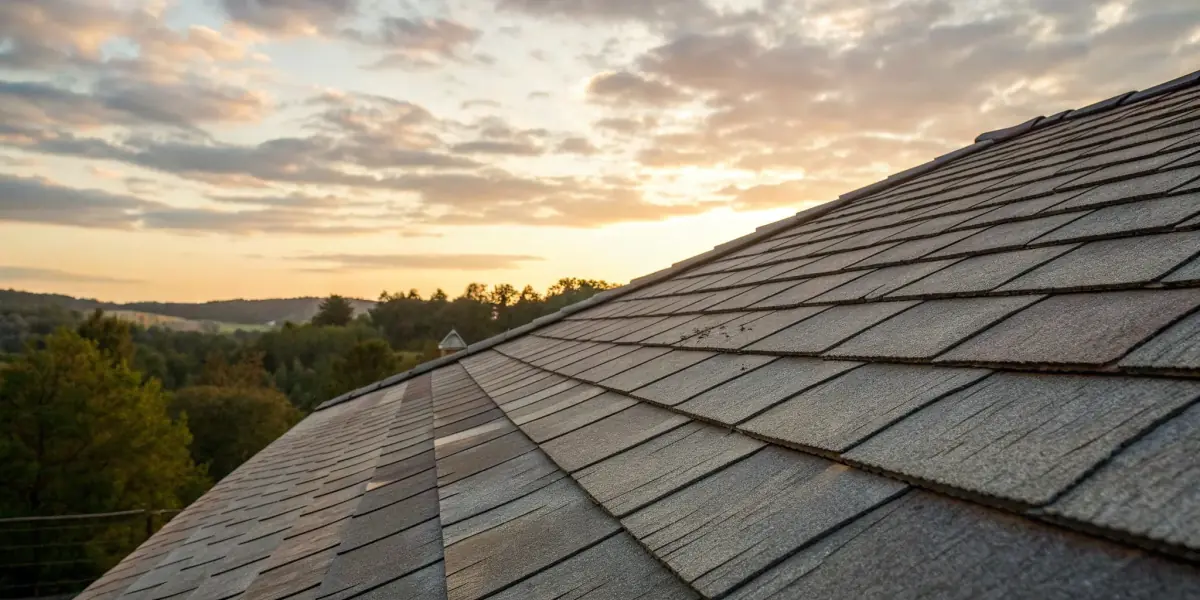
How long do architectural shingles last? In Corpus Christi's coastal climate, architectural shingles typically last 20–30 years with proper installation and maintenance. Premium brands like Owens Corning Duration can reach 30+ years, while budget options may only last 15–20 years due to salt air, UV exposure, and hurricane-force winds.
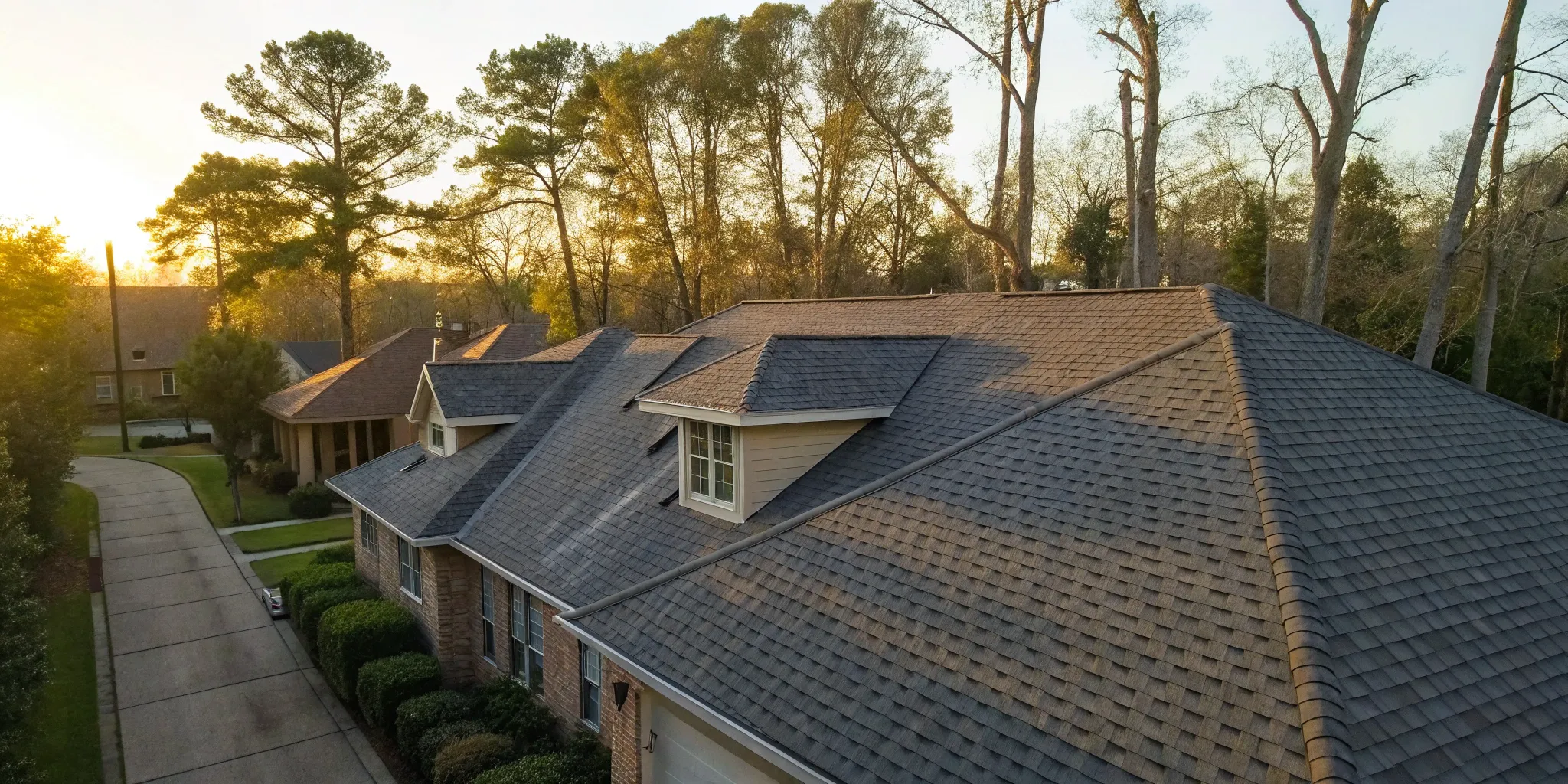
Most roofs in Corpus Christi use one of two shingle types. A 3-tab is a single flat layer with cutouts — cheap, lightweight, and what builders install when they’re watching every dollar. Architectural shingles are a different animal. Two or three layers of asphalt laminated together, heavier, thicker, and they actually look good on a house.
Quick answer: How long do architectural shingles last?
Architectural shingles last 15–30 years in real-world conditions. Standard lines (Owens Corning Oakridge) average 15–25 years. Premium lines (Owens Corning Duration) reach 20–30 years. In coastal Texas, expect 10–20% shorter lifespan due to salt air, UV, and hurricane exposure. Proper installation and ventilation matter as much as the shingle brand.
Looking for information about How Long Do Architectural Shingles Last? This guide covers everything Corpus Christi homeowners need to know.
The performance gap is just as big as the appearance gap. We see 3-tab roofs around here start failing at the 12-year mark. Architectural shingles routinely make it 25 to 30 years when installed correctly. You can compare styles and colors using our Shingle Assistant.
Fiberglass mat base, coated in waterproof asphalt, then a second (sometimes third) layer bonded on top. That laminated construction is what gives architectural shingles their dimensional look and their weight — usually 50% heavier per square than 3-tabs. The extra mass matters. Heavier shingles resist wind uplift better, which is why most architectural lines carry 130 mph wind ratings.
The top surface gets embedded ceramic granules. Those granules do the real work — blocking UV, shedding water, and giving the shingle its color. When you see granule loss in your gutters, that’s the shingle’s protective layer wearing away.
Manufacturers print “30-year” or “50-year” on the packaging. Take those numbers with a grain of salt.
The warranty period is a marketing number tied to specific installation conditions that rarely match real life. A “30-year” shingle installed in Arizona will last longer than the same shingle on a south-facing roof in Corpus Christi where it gets hammered by salt air, UV, humidity, and hurricane-force winds. Real-world lifespan here on the Gulf Coast runs 15 to 25 years for standard architectural shingles, and 20 to 30 for premium lines like Owens Corning Duration.
The shingles themselves are only part of the equation. Underlayment, ventilation, flashing, and installation quality account for at least half your roof’s lifespan.
Sun and heat. Our roofs bake under direct UV roughly 280 days a year. That UV breaks down asphalt binders and causes shingles to dry out, curl, and crack. Dark-colored shingles absorb more heat and degrade faster — something worth considering when you’re picking colors.
Salt and humidity. Gulf moisture creates a perfect environment for algae (those black streaks you see everywhere). Algae doesn’t destroy shingles immediately, but it traps moisture and accelerates granule loss over time. Most premium shingles now come with algae-resistant granules. Worth the upcharge down here.
Wind and storms. We’re in a hurricane zone. A single storm with 80+ mph gusts can rip off shingles that were installed with four nails instead of six, or nailed too high on the exposure line. Every roof we install gets six-nail patterns per shingle for this reason.
Bad ventilation. This is the silent killer. An under-ventilated attic hits 160°F in a Corpus Christi summer. That heat cooks shingles from underneath, blisters the asphalt, and voids manufacturer warranties. We check soffit and ridge vent ratios on every inspection — about 40% of the roofs we look at are under-ventilated.
I’ve seen a $15,000 premium shingle roof fail in 8 years because the crew skipped ice-and-water shield in the valleys and hand-nailed with three nails per shingle. I’ve also seen a mid-grade Duration roof hold up for 22 years because it was installed right — proper nail placement, sealed deck, balanced ventilation.
The shingle is maybe 30% of the equation. The other 70% is the system underneath it and the crew that puts it together. Ask your contractor about their nail patterns, underlayment specs, and ventilation calculations. If they can’t answer those questions, keep looking.
Annual inspections. Get on your roof (or hire someone to) once a year and after every major storm. We catch cracked flashing, lifted shingles, and clogged ridge vents on about a third of the inspections we do. Small catches prevent big failures.
Clean your gutters. Twice a year — spring and fall. Clogged gutters back water up under the drip edge and rot the deck. That’s not a shingle problem, but it’ll destroy your roof just the same.
Trim overhanging branches. Branches scrape granules off shingles and drop debris that holds moisture. Keep a 3-foot clearance minimum.
Fix problems immediately. A lifted shingle takes 10 minutes to re-seal. Left alone for a season, it lets water into the deck, and now you’re looking at a section replacement. Small maintenance prevents expensive repairs.
A few things to watch for. Curling or cupping shingles — that’s UV and heat damage, and it means the asphalt is dried out. Bare spots where granules have worn off. Cracked shingles. Dark water stains on your ceiling or in the attic. Any of these on a roof that’s 15+ years old, and you’re probably looking at a replacement rather than a patch job.
One more: if your neighbors are all getting new roofs, pay attention. Houses in the same subdivision, built around the same time, with the same sun exposure — they tend to need replacement within a few years of each other.
General rule: if the damage covers less than 30% of the roof and the rest of the shingles are in solid shape, a repair makes sense. Once you’re past that threshold, or if the roof is over 20 years old, replacement is usually the smarter investment. Patching an aging roof buys you a year or two at best, and the money you spend on repairs doesn’t come back when you eventually replace anyway.
We give honest assessments. If a repair will hold for another 5+ years, we’ll tell you. If you’re throwing money at a roof that needs replacing, we’ll tell you that too. Get a free estimate and we’ll walk through your options.
For homeowners on the Texas Gulf Coast, architectural shingles typically last 20 to 30 years with proper maintenance. Extreme heat, humidity, and storm exposure can shorten this lifespan, making regular roof inspections critical.
Not all architectural shingles are created equal. Here is how the major brands compare for Gulf Coast performance:
Owens Corning Duration (25-30 years). The SureNail strip gives this shingle one of the best wind ratings in the industry — 130 mph standard. The WeatherGuard technology resists algae growth, which is critical in our humidity. Duration is the most popular architectural shingle we install in Corpus Christi, and we consistently see them outlast their warranty period when installed with proper ventilation.
CertainTeed Landmark (20-25 years). A dependable mid-range option with a good algae resistance coating (StreakFighter). We typically see Landmark shingles perform well for 20 to 25 years on the Gulf Coast, though the granule adhesion is not quite as aggressive as Duration on high-wind days.
Atlas Pinnacle Pristine (20-25 years). Features Scotchgard Protector for algae resistance. A solid budget-friendly architectural option, though less commonly available from distributors in our area.
Regardless of brand, the installation system underneath the shingle — underlayment, ventilation, flashing, nail pattern — determines whether you hit the low end or high end of those ranges.
If you are deciding between roofing materials, here is how architectural shingles compare for the Corpus Christi climate:
3-Tab Shingles: 12-18 years on the Gulf Coast. Cheapest upfront but shortest lifespan. The single-layer construction cannot handle our wind and UV exposure as well as architectural shingles.
Architectural Shingles: 20-30 years. The sweet spot for most homeowners — excellent balance of cost, appearance, and durability. Most residential roofs in South Texas use this option.
Standing Seam Metal: 40-60+ years. Significantly longer lifespan and superior wind resistance, but 2-3x the upfront cost. Worth considering for homeowners who plan to stay long-term. Learn more about standing seam roofing.
Stone Coated Steel: 40-50 years. Combines the look of shingles or tile with metal durability. Excellent in hurricane zones. Explore stone coated steel options.
Clay Tile: 50-75 years. The longest-lasting option, but heavy and expensive. Because of its weight, we check the framing for your job. See our clay tile roofing services.
For most Corpus Christi homeowners, architectural shingles deliver the best value when factoring in installation cost, curb appeal, and 20-30 year performance.
As of 2025-2026, expect to pay between $8,000 and $15,000 for a standard architectural shingle roof replacement on a typical single-story home in Corpus Christi (1,500-2,500 sq ft). Premium shingles like Owens Corning Duration add roughly $1,000-$2,000 to the total compared to entry-level architectural lines.
Key cost factors include roof complexity (hips, valleys, dormers), pitch steepness, number of layers to tear off, and whether the deck needs repair. We also factor in the Texas windstorm code, which sets specific nail patterns, and the paperwork for a WPI-8 windstorm certificate.
Get a quick ballpark estimate with our free roof cost calculator, or schedule a free inspection for a detailed quote.
Use our Roof Depreciation Calculator to estimate your current roof’s value based on age and material — helpful for insurance claims and replacement planning.
Need help with the upfront cost? Explore roof financing options with flexible payment plans from multiple lenders.
How long do 30-year architectural shingles really last?
In the Corpus Christi area, “30-year” architectural shingles typically last 20 to 25 years with proper installation and maintenance. The “30-year” label reflects the warranty period under ideal conditions, not a guaranteed lifespan. Gulf Coast heat, humidity, and storm exposure reduce actual performance compared to milder climates.
How long do architectural shingles last in Texas?
In Texas, architectural shingles last 15 to 30 years depending on location. In the Dallas-Fort Worth area with less humidity and salt, you might see 25-30 years. On the Gulf Coast — Corpus Christi, Houston, Galveston — expect 20-25 years for standard lines and up to 30 years for premium shingles with algae resistance and proper ventilation.
Are architectural shingles worth the extra cost over 3-tab?
Yes, especially on the Texas coast. Architectural shingles cost 20-30% more than 3-tab but last nearly twice as long (20-30 years vs 12-18 years). They also carry higher wind ratings (130 mph vs 60-70 mph), which is critical for TWIA compliance. Over the life of the roof, architectural shingles cost less per year.
What voids an architectural shingle warranty?
The most common warranty voidances we see are improper ventilation (not meeting manufacturer specs), incorrect nail placement, power-washing the roof, installing over existing shingles without manufacturer approval, and using an uncertified installer. Always verify your contractor is certified by the shingle manufacturer.
Can you repair architectural shingles or do you need a full replacement?
You can repair localized damage — a few missing or cracked shingles from storm impact, for example. But if more than 30% of the roof shows wear, curling, or granule loss, a full replacement is more cost-effective than repeated repairs. Our team provides honest assessments on every inspection.
Explore our professional roofing services in Corpus Christi and surrounding areas:
Learn more about shingle certifications at Owens Corning Roofing.
🔒 Free, no-obligation quote — Price-locked estimate in 24–48 hrs
Trace your roof on satellite imagery and get a real installed price in under 60 seconds.
Powered by satellite roof measurement technology. No obligation.