
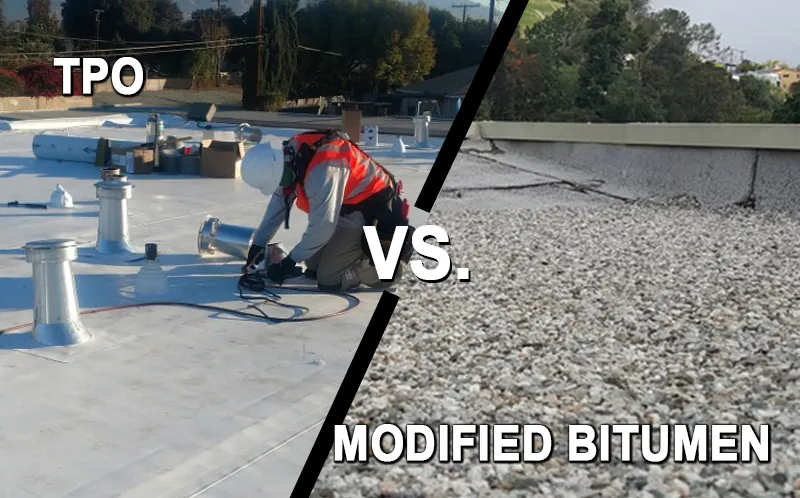
When it comes to roofing solutions for commercial properties, flat roofs are a popular choice due to their functional design and accessibility. As a flat roof contractor serving Corpus Christi and the Coastal Bend, we know that understanding the benefits and drawbacks of the most common materials—Modified Bitumen and Thermoplastic Polyolefin (TPO)—is essential. In this article, we will walk through the pros and cons of these roofing systems, helping you make informed decisions for your flat roofing needs.
Why Choose Flat Roofs?
Flat roofs are characterized by their nearly level surfaces, which makes them an excellent option for a variety of applications, particularly in commercial settings. They provide several advantages, including:
1. Utilization of Space:
Flat roofs can be used for additional purposes, such as installing HVAC units, solar panels, or creating rooftop gardens.
2. Cost-Effectiveness:
Generally, flat roofs are less expensive to install than sloped roofs. The materials and labor involved in flat roofing are often more affordable.
3. Ease of Maintenance:
The accessible nature of flat roofs makes routine inspections and maintenance more straightforward, leading to easier repairs when necessary.
However, the effectiveness of a flat roof heavily depends on the materials used. The two most commonly employed materials for flat roofing are Modified Bitumen and TPO.
Modified Bitumen Roofing
Modified Bitumen is an asphalt-based roofing system that has been enhanced with polymers to improve performance. It is installed in multiple layers, providing durability and flexibility. Modified Bitumen roofing can be installed using various methods, including torch-applied, cold adhesive, or self-adhered.
Pros of Modified Bitumen
1. Durability:
Modified Bitumen roofs are known for their long lifespan, typically lasting 20 years or more when properly installed and maintained. They can withstand harsh weather conditions, making them suitable for the Texas climate.
2. Flexibility:
The polymer modification allows the material to expand and contract with temperature changes, reducing the risk of cracking and supporting better performance in extreme heat or cold.
3. Water Resistance:
Modified Bitumen systems offer excellent waterproofing capabilities, with multiple layers providing added protection against leaks.
4. Ease of Repair:
In the event of damage, Modified Bitumen roofs can be repaired relatively easily, saving both time and money in maintenance costs.
5. Variety of Options:
Modified Bitumen is available in different colors and granule finishes, allowing property owners to select an option that complements the building’s aesthetics.
Cons of Modified Bitumen
Weight:
The multi-layer system can be heavier than other roofing materials, which may require additional structural support.
Installation Complexity:
Installation requires experienced professionals, and the need for precise application techniques, particularly with torch-applied methods, can complicate the installation process.
Cost:
While generally affordable, the initial cost of Modified Bitumen roofing can be higher than single-ply options like TPO, especially if multiple layers are required.
TPO Roofing
Thermoplastic Polyolefin (TPO) is a single-ply roofing membrane that is gaining popularity in the commercial roofing market. Made from a blend of polypropylene and ethylene-propylene rubber, TPO is known for its energy efficiency and ease of installation. A 20-year manufacturer material warranty is available on TPO membranes.
Pros of TPO
Energy Efficiency:
TPO roofing systems are highly reflective, helping to reduce heat absorption and lower energy costs during hot Texas summers. This reflectivity can lead to real savings on cooling expenses.
Lightweight:
TPO membranes are much lighter than modified bitumen systems, which can ease the structural load on the building and reduce installation complexity.
Quick Installation:
The single-ply nature of TPO makes it quicker and easier to install compared to multi-layer systems. This can lead to lower labor costs and a shorter installation.
Resistance to Chemicals and UV Rays:
TPO roofs are highly resistant to UV rays and various chemicals, which enhances their longevity and performance in industrial settings.
Cost-Effectiveness:
Generally, TPO systems have a lower upfront cost compared to Modified Bitumen systems, making them an attractive option for budget-conscious property owners.
Cons of TPO
Seam Vulnerability:
TPO roofing relies on seams for its water-tightness, and if not properly welded or adhered, these seams can become weak points, leading to leaks.
Limited Color Options:
While TPO is available in several colors, the selection is not as extensive as that of Modified Bitumen, which may be a consideration for aesthetic preferences.
Performance in Extreme Conditions:
While TPO performs well in many conditions, extreme weather events or significant temperature fluctuations may affect its longevity compared to the flexibility of Modified Bitumen.
Making the Right Choice for Your Flat Roof
When considering flat roofing options for your property in Corpus Christi or elsewhere in the Coastal Bend, it’s essential to weigh the pros and cons of Modified Bitumen and TPO. Your choice will depend on several factors, including budget, climate conditions, and specific building requirements.
Conclusion
As a flat roof contractor in Corpus Christi, RISE Roofing is dedicated to providing quality roofing solutions tailored to your needs. Whether you opt for Modified Bitumen or TPO, our experienced team is here to guide you through the process, helping you make an informed decision that enhances the safety, durability, and energy efficiency of your building. Contact us today to learn more about our flat roofing services and get started on your project!
Industry resources from the National Roofing Contractors Association (NRCA).