
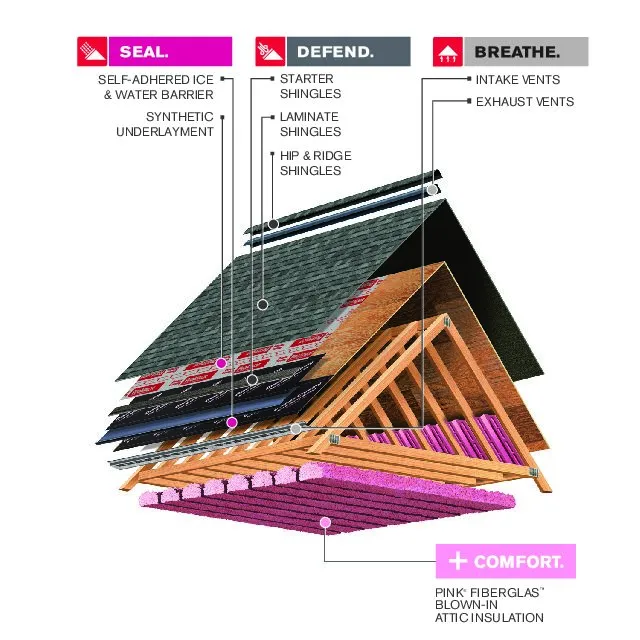
Major Components of a Shingle Roofing System
An Overview
Using a complete roofing system like the Owens Corning Total Protection Roofing System will ensure that all components work together seamlessly. Each part enhances the performance of the others, resulting in a durable, long-lasting roof that offers superior protection and energy efficiency.
Understanding each roofing component allows homeowners to make informed decisions about their roofing system and get the most from their investment. With the right combination of materials and expert installation, your roof can provide strong protection, curb appeal, and comfort for decades to come.
Hip & Ridge Shingles
These shingles cover the roof’s ridges and hips (where two roof slopes meet) to provide a polished look and added protection against water and wind.
Specially designed for flexibility and durability, they complement the main shingles in both style and function.
Laminate Shingles
These are the main roofing material, providing the primary defense against the elements. They create the visible, protective top layer of your roof.
Known for their durability and aesthetics, laminate (architectural) shingles come in various colors and designs to match any architectural style. In the Corpus Christi area, architectural shingles typically last 25 to 30 years.
Starter Shingles
These are the first row of shingles installed at the edges of the roof. They ensure a clean, straight edge and help anchor the roof against wind uplift.
Pre-cut and designed for efficiency, starter shingles simplify the installation process and provide a secure foundation for the rest of the roof. Owens Corning Duration shingles carry a wind warranty of up to 160 mph only when installed with the required Owens Corning components, including starter on the eaves and rakes.
Ice & Water Barrier
This self-adhered membrane is applied to areas prone to water infiltration, such as valleys, eaves, and around penetrations like chimneys or vents.
It creates a watertight seal that helps prevent leaks caused by heavy, wind-driven rain.
Synthetic Underlayment
Installed beneath the shingles, this layer acts as a secondary barrier against water and moisture.
Unlike traditional felt paper, synthetic underlayment is lightweight, durable, and resistant to tearing, enhancing the overall performance of the roof.
Ventilation System
Intake Vents
These allow fresh air to enter the attic, promoting circulation and preventing moisture buildup.
Installed at the soffits, they are critical for balanced attic ventilation.
Exhaust Vents
These expel warm, moist air from the attic, helping to regulate temperature and prevent condensation.
Commonly installed at the roof ridge or gables, they help keep the attic dry and cool.
Attic Insulation
While not a direct component of the roof, attic insulation works with the ventilation system to improve energy efficiency and comfort in your home.
Insulation helps maintain a consistent indoor temperature, reducing energy costs and preventing heat loss through the roof.
Key Performance Areas of a Shingle Roofing System
Seal
• The ice and water barrier and underlayment help create a waterproof barrier to prevent leaks.
Defend
• Shingles, including hip & ridge and starter shingles, protect against weather elements like wind, rain, and UV rays.
Breathe
• Proper ventilation ensures balanced attic airflow, preventing moisture buildup and extending the roof’s lifespan.
Why a Complete System Matters
An asphalt shingle roof installed as a complete system, like Owens Corning’s, ensures that all components work together seamlessly. Each component enhances the performance of the others, resulting in a durable, long-lasting roof that offers superior protection and energy efficiency.
If you’re planning a new roof installation or replacement, understanding these components can help you make informed decisions. Contact RISE Roofing, an Owens Corning certified installer, to learn more about architectural shingle roofing and how we can help protect your home and reduce future shingle roof repairs.
About the Author
Anthony Gallo
I’m Anthony Gallo. At RISE Roofing, I combine a background in technology, operations, engineering, and customer service to deliver roofs that perform—and a customer experience that’s predictable and transparent. On this blog, I translate field notes and building science into checklists, cost‑benefit breakdowns, and maintenance plans you can actually use. You’ll see me write often about metal roofing (standing seam, metal tile, metal shingles, metal shake), balanced ventilation, storm prep and documentation, and ways to extend roof life through smart design and upkeep. My creativity is powered by dedication and focus for every one of our customers. -- Raising Standards, One Roof at a Time.
How the Components Work Together on a Coastal Roof
Each layer above does one job, but on the Coastal Bend they only perform as a system. Underlayment is the backup when wind-driven rain gets under a shingle. Starter strips seal the first course at the eaves, where wind uplift starts. Flashing carries water around chimneys, walls and skylights, and ridge and soffit vents keep the attic from cooking the shingles from below.
Manufacturers write their warranties around that system. Owens Corning Duration shingles, for example, carry a wind warranty up to 160 mph only when the required Owens Corning components are used and starter shingles are installed on both the eaves and the rakes. Mixing brands or skipping a component can shrink the warranty you thought you were buying.
When we inspect a roof, we check each component in turn: underlayment at any exposed edges, the seal of the starter course, flashing joints, nail placement on lifted shingles, and whether the attic is venting. That tells you whether a repair will hold or whether the system as a whole is near the end of its life.
Industry resources from the National Roofing Contractors Association (NRCA).